Author Archives: Rachael Roberts

Rachael Roberts's avatar

About Rachael Roberts

Teacher, teacher trainer, ELT materials writer and Life Coach for teachers and education professionals

Using a genre approach for writing

Real Life Adv Pearson (1)Real Life Adv -Pearson (2)As we saw in the last post, all ‘real life’ writing is embedded in a social situation: we write for a specific purpose and audience. We can, of course, also do this in the classroom, but often we are engaged more in rehearsing skills that can later be applied outside the class.

However, the genre approach to writing still places a lot of emphasis on the context and purpose for which the writing is produced. By genre we mean different types of writing such as narrative, report, informal letter and so on. Each of these has quite specific features in terms of organisation and language, and the genre approach usually takes a model and gets the students to analyse these features, before producing something similar.

This approach undoubtedly has its roots in the product approach. A typical product writing lesson might involve:

1 Reading and analysing a model

2 Controlled writing, such as writing individual sentences using a substitution table

3 Freer or guided writing (such as  using notes given to construct one or two of the paragraphs in a letter -the rest being already given)

4 Free writing of a parallel text.

In the same way, however, that there is a big difference between PPP (presentation, practice, production) and more modern paradigms, such as Scott Thornbury’s awareness, appropriation and autonomy , there is actually the same kind of difference between product writing and genre-based approaches.

Thornbury’s ‘awareness’ is about giving students the opportunity to notice features of language, rather than having language presented to them on a plate.  In writing, as in speaking, this is about exposing learners to features of written language and setting tasks which will help them to notice the salient features.

‘Appropriation’ is about making something your own; not just repeating patterns but actually assimilating the new language into your personal store. Thornbury makes a memorable contrast between controlled practice and ‘practised control’. The difference he says is that in the latter, the students are working on controlling the language, rather than the teacher trying to control what language the students can use. This can obviously apply just as well to writing as to speaking.

‘Autonomy’ is about using the language ‘under real operating conditions.’ When looking at writing, this doesn’t necessarily mean that the writing has to have a ‘real’ audience (though it can), but that the learners have complete control over the message they want to convey. They aren’t just reproducing a model.

At the top of the post is an example from Real Life Advanced (an upper secondary coursebook) of how I have tried to take a genre approach to writing. It’s is very easily generalizable to any genre of writing or level.

1 Through a lead-in discussion and a few questions, students first deal with the meaning of the text. It’s a travel anecdote or narrative.

2 Next the learners look at how the text is structured. This follows Labov’s Standard Western Narrative, and is a useful little structure to learn as a lot of different kinds of narratives (such as excuses, examples of past experience you might give at a job interview and so on will follow the same basic stages)

There are also some questions about the tenses used. This is something which students focused on earlier in the unit, so, as well as fleshing out the narrative structure, it acts as a review.

3 Then we start to ‘unpack’ some of the language in the text. ( Incidentally, I would highly recommend Scott Thornbury’s video on ‘unpacking a text’) Here we’re focusing on adverbs. Students compare the examples of adverbs they can find in the text with the rules and examples in the box.

4 The next exercise is intended to give students the opportunity to get some control over the language, putting the rules into action. They aren’t just drilling correct sentences; they’re having to think about how to use the language correctly and appropriately.

5 The learners then prepare to write their own story. They are encouraged to use the same structure, but the content is personal to them and their experiences or knowledge. You may notice that there are prompt questions referring to colours and adjectives used to describe the background, and to what the characters say. These points again refer back to previous activities in the unit (on adjectives and verbs of speaking – mumbled, whispered), providing the opportunity, or ‘nudge’, for students to use this language again in a different context.

Clearly this kind of approach can be used for any kind of text. The key stages are:

1 Read the ‘model’ for meaning first, don’t just see it as a model, but as a piece of communication.

2 Focus on the organisation. Different genres of texts have different organising principles. Research or think about how this genre of writing usually starts and finishes. Is the content in any particular order? For example, an IELTS Part 1 Writing Task, describing a graph, usually begins by stating what the graph shows, then may provide an overview before detailing the key pieces of information (or the overview may come at the end). You could get students to look at examples and draw flow charts of how they perceive the organisation.

3 ‘Unpack’ the language. You can choose some language which seems particularly relevant to the task or you might use corpora to identify language on which to focus. Putting several texts of the genre you want your students to learn to write into a text based concordance, such as that at www.lextutor.ca should give you some useful information about the kind of language students could usefully be encouraged to notice.

4 Provide practice to help students gain more control of the language

5 Help students to put together what they have noticed to help them write their own text. Make sure that the text is more than just reproducing a model, ideally that it has some personal meaning. For example, in the IELTS text type mentioned above, perhaps they could write up the results of their own surveys?

15 Comments

Filed under Different ways to use a coursebook, IELTS, Planning, Teaching methodology, Writing

‘Real world’ writing activities

2051756510_c0138daf6e

‘We don’t just ‘read’ and ‘write’: we always read and write something for a particular purpose, in a particular way, in a particular time and place.’

David Barton

Outside the classroom, any writing our learners do will have a specific purpose and context. Inside the classroom, by definition, any writing is likely to be more simply for the sake of developing skills and language, and displaying those skills.

However, the difference between ‘real’ writing and display writing isn’t a binary distinction; it’s more of a continuum. Our job, as teachers, is to bring the two ends of the spectrum closer together, and help students to see the links.

How much do you know about the purposes for which your learners need to (or aspire to) write in English?

Obviously, if your learners are in an ESE (English-speaking environment), they are likely to have many pressing needs, such as form filling, work-related paper-work, emails, notes to school and so on. There are literally endless ways in which these learners can carry out real-world writing tasks, including writing to local papers, to their MPs and so on. Even in NESE contexts, learners may well need to use written English for work, especially with the growth of the internet and the increased tendency to communicate in writing.

For younger learners and most General English learners in NESE contexts, however, they may not have a current need to write in English at all, but it is still important for writing to be clearly contextualised, and have an audience. We don’t speak without any sense of who we are speaking to, and neither should we write in that way.

That said, I don’t believe that all classroom writing activities have to connect directly to the real world. The important thing is that the activity has a significance or personal value for the learners and that they know why they’re doing it. In the next few blog posts, I’d like to look more closely at some different ways to support learners in developing their writing skills, looking at genre-based and process-based approaches. All of these will, of course, have a purpose and an audience, but not necessarily an actual, immediate real-world one.

Writing for the public can, however, be extremely motivating. Below are some ideas to try, which would work with learners not in an ESE. Feel free to add anything else you’ve tried in the comments, it would be great to build up as long a list as possible:

  •  Writing to a favourite author. Many authors now have blog pages or other ways in which they can be contacted. Learners could choose their own author (which might be someone they have only read in translation), or this could be part of a class extended reading project.
  • Writing a review of a product, film or book on a website. From being a rather unnatural task, writing a review is now something that many people do regularly on sites such as Amazon.
  • Writing on behalf on victims of human rights abuse. Assuming this is appropriate in your context, this is a very real-world writing activity and could really make a difference in the world. See the Amnesty website  where you will find sample letters and advice.
  • Writing fiction for the internet. How about writing an 140 character story for Twitter [#140novel]? Or use one of the many websites where you can publish short stories, such as www.booksie.com? For younger learners, try Littlebirdtales,  where learners can create a picture story which is then emailed to specific friends and family, rather than being open to the whole internet. Or, a personal favourite, www.futureme.org.  On this site, people write letters to themselves to be delivered on a specific date in the future. Still a real audience….
  • Comments on news articles and opinion pieces. Most newspapers now have online version where readers can comment. A particularly good source is the BBC, which asks specifically for comments in the Have your Say section. For example, this article and comments on ‘Invisibility cloaks: will we ever really have them?’


10 Comments

Filed under Teaching methodology, Writing

Mindfulness for students (with no tibetan bells or yoga)

In my previous post I gave a brief overview of what I think mindfulness is, and how it can be beneficial for teachers. As I think it can be beneficial for everyone, obviously, there are applications for students as well.

While I do believe that our remit as teachers can be wider than simply teaching language, I don’t think it is the teacher’s role to therapise the students, nor are most teachers in any way trained or prepared for this. That said, most teachers don’t have a problem with encouraging students to develop self-evaluation skills, and mindfulness can be seen as simply an extension of this.

Perhaps the central focus of mindfulness is the focus on the present moment. This doesn’t mean that you somehow aren’t allowed to think about what’s just happened or about to happen, but that you shouldn’t be so caught up in the past or future that you aren’t really ‘here’. So an activity where you describe a memory is absolutely fine; thinking about what you’re going to have for tea tonight while your partner talks to you about their memory, not so much.

Clearly, it is in the interests of learning for students to be fully present in the classroom, so how could this be facilitated?

Start the class right

In my last post, I mentioned the importance of starting the day right. The same principles can be applied to a class. It’s really important to start the class with everyone fully focused. Some ideas for facilitating this, from Mindful Teaching and Teaching Mindfulness

–          For young learners, start with a song or jazz chant or clapping game.

–          Take out something really interesting to look at and gradually pull in everyone’s attention

–          Read something really interesting aloud

–          Start with a riddle or puzzle

–          If learners are engaged in discussing something as they come into class, start there.

[And there was another idea involving using a Tibetan bell….but I promised EBEFL that I wouldn’t mention anything like that ;)]

Awareness

In this excellent post, Kevin Stein writes about keeping a real time journal- a reflective tool  where he jots down notes about what is actually happening in the class as it happens. This helps him to make decisions about what to do next- in essence it’s a tool for focusing on the present.

The same kind of activity can work very well for students, and is a good short activity for early finishers. Rather than drifting off, ask them to write a few sentences about what they notice happening in the classroom and/or about what they are feeling. This might give you an insight into the class or the student from a different angle- unless the student wants to keep what they have written private.

Or you could occasionally carry out more extended noticing tasks. For example, the dogme activity, the Sounds of Silence, from Teaching Unplugged, where the class simply listens in silence for one minute to whatever is happening around them (open the windows or door) and then discusses what they heard.

A classic mindfulness activity (originating, I think, with Jon Kabat-Zinn)  is to eat a raisin, with complete attention. For example:

Pick up a raisin and hold it in the palm of your hand. Look at it. Examine it. Describe the raisin. What does it look like? What color is it? How would you describe the texture? Now, feel the raisin in the palm of your hand. What does it feel like against your skin? Pick it up with your other hand. What does it feel like in your fingers? Is it slimy? Rough? Smooth? Soft? Hard? Squeeze it softly. What do you feel? Smell the raisin. Describe how it smells. Put the raisin in your mouth, but do not eat it. What does it feel like on your tongue? What does the texture feel like now? How does it taste? How does the taste compare to the way it smelled? Move it around in your mouth and notice every aspect of the raisin. Bite the raisin and think about what you taste. Now how does the raisin feel in your mouth? Finish chewing and eat the raisin. How did it taste? Describe the experience of the raisin.

This can work really well in class-students listen, carry out the activity and then write about the experience. Of course, you could do it with any activity- not just eating a raisin!

Dialogic teaching

Any approach, such as Dogme, where the emphasis is on real-time communication between the people in the class, will naturally promote being in the present (even if you’re talking about past experiences). If students are fully involved and engaged, they are present.

In this way, most teachers will, of course, already be promoting mindfulness with their students, and will be in a mindful state themselves whenever they are completely engaged and ‘in the flow’.

However, even in this kind of dialogue, we are not always in the present. Tim Lott puts this very well in a recent Guardian article:

In our western relationship with time, in which we compulsively pick over the past in order to learn lessons from it, and then project into a hypothetical future in which those lessons can be applied, the present moment has been compressed to a tiny sliver on the clock face between a vast past and an infinite future. Zen, more than anything else, is about reclaiming and expanding the present moment.

We talk about ‘teachable moments’, and it is my experience that the more fully engaged people are, the more teachable moments appear. So, conversation with students can, I believe, be taken deeper, and made more memorable, by asking questions which bring students back to now.

  • How do you know that is true?
  • Can you think of any situations in which that might not be true?
  • Is there another way to see that?

This doesn’t mean that you are saying that what they believe isn’t true, by the way, just that you are getting them to think about it again, from a fresh viewpoint.

Emotional response

A central part of awareness is being aware of emotions and feelings. Fiona Mauchline recently wrote a wonderful blog post about getting in touch with emotions as a way of making language more memorable.

We learn language when it becomes ‘salient’ for us, and an emotional response is a big part of that. A lesson on what makes you happy, by @designer lessons, had a profound effect on a class I taught, both emotionally and in terms of the language they seemed to retain.

Similarly, you could have a lesson about what things make people feel angry (bearing in mind the questions under dialogic teaching above).

In mindfulness, however, there is an important distinction between being aware of emotions, and believing that the emotion IS you. Mindfulness works on recognising the emotion, accepting that you’re experiencing it (rather than suppressing it), but seeing it as a passing event, like feeling hot or cold. They’re just sensations in the moment, and will pass.

The element of surprise

You can’t learn if you’re not awake , said Kevn Stein in another blog post you should check out. He was talking about introducing elements of surprise or challenge to wake students up. Mindfulness, far from being a passive kind of drifting off, is all about being awake, really awake.

So, ultimately, anything which (gently) pulls students (and teacher) awake and in touch with what is actually happening right now, is mindfulness. With this in mind, I’d argue that it’s easy to see how mindfulness applies to the classroom, as much as any other part of life.

For Phil Longwell talking about mindfulness on the #ELTchat podcast see http://eltchatpodcast.podomatic.com/

If you’re interested in mindfulness, check out my new website, www.life-resourceful.com


14 Comments

Filed under Teaching methodology, Working with groups

Mindfulness for teachers

What mindfulness is (and is not)

Mindfulness is a term that is becoming increasingly familiar to many people, but it is still not that clear to many, I think, what exactly it means. Mindfulness isn’t about drifting off into your inner world; it’s more about being fully conscious, really aware of what we’re doing and feeling, right now.

Most of us spend most of our time only dimly aware of what’s happening for us right now. We are usually too busy making future plans, worrying about stuff, remembering things and reacting to situations based on what we think we’ve learnt in the past.  Our mind is crowded out with all sorts of stuff.

However, mindfulness isn’t about having an empty mind; it’s about being focused.

Why mindfulness for teachers?

For many people, myself included, one of the great attractions of teaching is that it can be so absorbing that I often find myself in a state of what Csikszentmihalyi calls ‘flow’. When we are totally present in the classroom (or anywhere else), time goes very quickly and we are really in a state of heightened awareness, feeling alert and alive. Communication flows easily between us and others and everyone seems to be really focused on the experience of learning. This is a very enjoyable form of mindfulness, and it can be encouraged by developing our own mindfulness practice outside the classroom.

Mindfulness , flow, feeling connected  is not so much something that we have to acquire, as something which is always there, but that we tend to be very good at blocking out through anxiety, fear, anger, mind-chatter, judgements and so on.

The more we practice mindfulness, the easier it is to connect to that peaceful place when we’re under pressure, students are playing up, the lesson plan isn’t working and so on.

Mindfulness helps us to be able to respond to a difficult situation calmly, rather than a knee-jerk reaction of feeling angry with ourselves or the students, or feeling that we’re not good enough or whatever our particular ‘favourite’ reaction might be.

Rather than feeling exhausted and drained at the end of a class, we’ll feel energised and alive (and so will the students).

Techniques to develop mindfulness

A key personal discovery is how important it is to start the day right. That doesn’t mean you can’t get things back on track, but it seems to really help to start by getting into the right frame of mind. How you do this is a matter of individual choice, of course: meditation, a brisk walk taking full notice of nature around you or simply setting your intention for the day- reminding yourself to stay in touch with what’s actually happening, take proper breaks, eat well, or to be kinder to yourself etc.

Whenever you remember (and don’t beat yourself up for forgetting, because you will most of the time), check in with what’s actually happening, and how you are feeling. When those feelings are negative, don’t deny or suppress them- just notice them and accept them (rather than telling yourself you shouldn’t feel that way), and most of the time they’ll just fade away. When they don’t, you can put them to one side until later and then try a bit of pillow bashing, talking stuff through, writing it all down and so on. But remember that your thoughts aren’t necessarily true- they’re just thoughts. This may help you not to get too caught up in the drama of it all.

Every so often (decide when in advance), take a few minutes to just breathe and become aware. I like to go for a short walk outside.

There are several excellent books on developing mindfulness which I would recommend for developing your own practice:

Mindful teaching and teaching mindfulness – Deborah R. Schoeberlein

Mindfulness: a practical guide -Mark Williams and Danny Penman

Mindfulness for beginners: Jon Kabat-Zinn

Any of these books will guide you through exercises designed to help build your inner resilience, dissipate stress, help you to be in the ‘flow’, help you deal with difficult situations and students and generally greatly improve your quality of life.

In my next post, I’d like to look at how you can encourage mindfulness from your students- in ways that won’t feel too different from what you already do, but that may make a difference to the quality of learning.

Other blog posts on mindfulness related topics:

http://tpstefltravels.blogspot.co.uk/2012/10/mindfulness-elt-chat-summary.html

http://itdi.pro/blog/2012/05/14/working-with-difficult-students-chuck-sandy/

http://malingual.blogspot.co.uk/2012/10/a-note-on-mindfulness.html

If you’re interested in mindfulness, check out my new website, www.life-resourceful.com

7 Comments

Filed under Teaching methodology, Working with groups

Task repetition: helping students to improve accuracy,repertoire and fluency

I am very far from being a fluent Polish speaker. In fact, after four years of hard study and living in the country, I was still probably only about B2 level. However, if you happened to hear me chatting to a taxi driver in Polish, you’d probably conclude I was pretty fluent.

I was very good indeed at the basic chitchat of where are you from, how long have you been in Poland, what do you think about Poland and so on. And the reason I became so fluent (in this context)? ….I caught a lot of taxis.

In other words, I had plenty of opportunity for task repetition. In language learning terms, task repetition is a term most often related to task-based learning. Perhaps one of the key articles about this is Martin Bygate’s Effects of task repetition: appraising the developing language of learners. In this article, Bygate suggests several benefits to getting learners to repeat a task:

  •  More fluency in terms of pausing and speed (less need to plan as we speak)
  • Fewer false starts and self corrections
  • Fewer errors

These reasons seem fairly self-evident, and you could say exactly the same things about drilling a dialogue. However, while I also think there are benefits in simply repeating or drilling, task repetition is about more than this. Bygate suggests that once the speaker is more familiar with the content, this frees them up to not simply make fewer errors or speak more quickly, but to actually pay more attention to how they formulate their meaning.

In this article, Bygate demonstrated (admittedly with a small sample), that repeating a simple speaking task (in this case describing a film), without any input or feedback, still led to the learner producing more appropriate and more complex language. They improved in terms of accuracy, repertoire and fluency.

Since then, further research has confirmed that task repetition does indeed have a positive effect on complexity and fluency, though some feel that learners may also need feedback on the first task (instinctively, I would tend to agree with this).

So, how can we start to build in more task repetition without boring students? The first thing to say, perhaps, is that I think the idea that repeating a task is boring, may well be a projection from the teacher. If a student is really engaged in a task, and struggling (in a good way) with getting meaning across, it won’t be boring, but satisfying. See this article  for a piece of research which set out to prove this.

In repeating speaking activities, I would suggest:

–      Play about with giving feedback in between repetitions. Sometimes you could give immediate feedback, with examples you have noted while monitoring. Sometimes you could make notes then use these notes to plan a short teaching session in another lesson, before a task is repeated. Sometimes the feedback could be self-evaluation (especially if students are able to record themselves) or peer feedback.

–      Try repeating the task at different time intervals (immediately, next lesson, next week, next month) and see what difference it makes. Again, recording both versions can be very helpful so that students themselves can be helped to notice improvements.

–      Change the audience for the task. This could just be telling the story again to a new partner (which makes it more genuinely communicative), or it could be moving from 1-2-1 to speaking to a larger group, or from speaking to a live group to recording the talk (using Vocaroo or just a mobile phone).

–      Change the task slightly. Choose a new task which has enough parallels in terms of structure and likely language for students to benefit from repetition, but enough difference to keep up the interest. For example, asking students to retell a narrative from the point of view of a different person involved in the story (same events, different perspective)

And, of course, task repetition does not always have to be about speaking. All the above points could equally well apply to writing. We have more time available to process when writing, so combining writing and speaking can work very well too. First students tell and then they write- or vice versa.

And it can even apply to receptive skills work. See this post, for example, on repeated reading.

Please feel free to add other task repetition ideas- I’m sure the possibilities are endless.


20 Comments

Filed under Different ways to use a coursebook, Speaking, Teaching methodology, Vocabulary

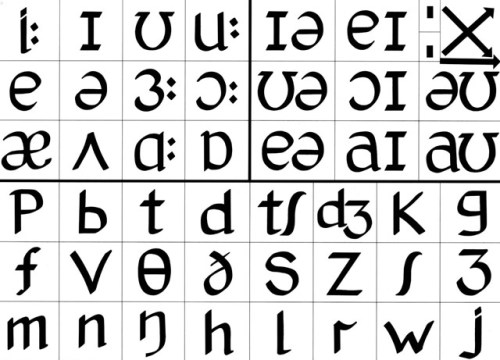
Using the phonemic chart- or not?

Love it, hate it, feel guilty about it…or just mystified?

The first #ELTChat on Twitter 7th November 2012 discussed the phonemic chart (and script) asking ‘Do you use it? Why/why not? And how?’

There were quite a few participants who fell into the ‘love it’ category:

@worldteacher ‘I’m a huge fan of the phonemic chart and use it in every lesson.’

@BobK99 ‘Can’t see how anyone can teach English effectively WITHOUT IPA.’

@Julian_L’enfant ‘I use the phonemic chart with learners of all ages. An excellent resource & important for learner autonomy.’

Others, such as @teflerinha, @KerrCarolyn , @TEFL Geek , @jo_cummins, @sueAnnan  who like using it, but perhaps in more of an ad hoc way.

And those who didn’t use it, such as @bnleez, @michaelegriffin, @theteacherjames and @garyJones 01 (who preferred to use rhymes and tonguetwisters)

So the stage was set for a good discussion from different angles, though there were probably more people in favour of using the chart than against. The arguments on both sides are set out below.

Overwhelming, intimidating?

It’s complicated, takes time and students don’t know it (@michaelegriffin)

@bnleez: Pronunciation varies to such a degree, I find the Phon. chart would cause more confusion for learners than it needs to be

I found it intimidating as a new teacher, so what about students? (@jo_cummins)

Agree it can be overwhelming for ss and worse for ss without Roman alphabet perhaps? (@teflerinha)

Or empowering?

But using symbols empowers students (@worldteacher)

If trained in the chart, students can get word outside classroom and note down pron themselves (@TEFLGeek)

I agree with learner autonomy (@jo_Cummins)

Teaching in France, ‘improved pronunciation’ is one of the most common objectives (@KerrCarolyn)

I’ve found students who have followed courses w/pron more resourceful than new students entering the school (Julian_l’Enfant)

Unnecessary?

ELLs can use online dictionaries with sound files, so IPA is redundant (@bnleez)

I’m still not convinced the sts need to ‘see’ the pronunciation, just hear & reproduce it. (@theteacherjames)

Or a useful visual aid?

Students need to have constant access to internet and to already be able to differentiate between sounds (@TEFLGeek)

Great for use at home or if you have tech in the classroom – otherwise I’ll stick to paper charts & flashcards! (@worldteacher)

seeing it helps with highlighting the difference in form (@sueannan)

doesn’t seeing it help lock it into the memory? (@shaunwilden)

Some find it reassuring – identify visually what ears can’t deal with (@KerrCarolyn)

Complicated?

It’s complicated, takes time and students don’t know it (@michaelegriffin)

@bnleez: Pronunciation varies to such a degree, I find the Phon. chart would cause more confusion for learners than it needs to be

Or not so much…?

it just looks intimidating but once you start to study it it is logical. (@jo_Cummins)

Many symbols (e.g. consonants and some dipthongs) are self-evident (@teflerinha)

A restrictive model?

Does the idea of a ‘model’ (as suggested by using a uniform chart) undermine local accents & non-native teacher …(@laurahaha)

@teflerinha thought that different allophones (versions of the same phoneme) could be included in each phoneme)

There was also mention of the American IPA- see links below.

Unsuitable for learners without a Roman script, those with literacy problems or YLs?

Previous #ELTChat on similar subject made the point that study showed learning symbols made students with different alphabet more anxious (@michaelegriffin)

Interestingly my CELTA tutor told me its no problem for Korean/Japanese Ss to pick up easily because new scripts r easy (@michaelegriffin)

A new script shouldn’t be too hard. Japanese and Chinese know thousands of characters. And most consonants are the same.(@EBEFL)

@Marisa_C and @teflerinha both raised the point that it might not be a good idea for students who were already struggling with literacy (though @teflerinha would still probably use a few key symbols such as schwa)

There was also a brief discussion about YLs, and here opinion was divided.

I use it with adults but hardly use the symbols with YLs (@prese1)

When teaching YLs we’d use it as a secret code; Lee the Lion and Sid the Snake liked certain types of words.(@Julian_l’Enfant)

What does the chart or phonemic script offer in addition to the teacher’s other resources?

The teacher can model pronunciation (@bnleeez) but..

The chart can help with this as at least Underhills’ version (see link below) shows the mouth positions as well (@teflerinha)

It can really help with showing connected speech. E.g.(@harrisonmike):

/t̬ʊwæplz/

This shows the intrusive ‘w’.

@theteacher James suggested it would be as easy to write ‘tu wapples’

But others disagreed:

No- could be ‘too wapplz’ (@Marisa_C)

No, because people write things phonetically in very different ways (@teflerinha)

‘Tu wapples’ could cause spelling mistakes (@harrisonmike)

@Harrisonmike also described giving Farsi and Urdu speakers text in script to work out, and @teflerinha agreed that this was useful. For example:

Would you like to…? Could be represented as /wʊdʒə’laɪktə/, which shows how this phrase sounds in connected speech much more effectively than the words alone.

Other ways to use the chart or IPA

@Kerrcarolyn said ’11 Colour vowel sounds are great. I use the colors with kids and they love coloring words and poems’

@harrisonmike ‘good one is with minimal pairs and a maze on the board. eg. forked paths, one is 15, the other 50, or bin/bean (Pronunciation Games)– this is a link to Mark Hancock’s blog, with lots of Pron Games and activities.

@musical pass the symbol (@worldteacher)

Great activity from Arizio Sweeting’s new blog Pronunciation Central on Chasing and Tagging Phonemes (and other pron activities too)

@Bobk99 ‘s Phonemic Bingo

For a much longer list of activity ideas see the previous #eltchat on a similar subject 

Different charts

This is Adrian Underhill’s chart and blog . Also see @CGoodey’s blog entry on Adrian’s presentation and her aha moment on using the chart.

On YouTube you can find Adrian Underhill going through the chart. Part 1 is here.

a The British Council interactive char also shows sounds in words with sound at beg, middle and end . You can click to hear these and it deals with allophones – the way phonemes can be slightly different in these different places.

@julian_l’Enfant suggested Celce-Murcia Brinton & Goodwin’s for an American English chart (there is also one on Adrian Underhill’s blog, link above)

@ElaWassell gave the link to Macmillan’s The sounds app

@michaelegriffin gave us a link to five charts, including the two above.

@harrisonmike shared a link to a tool which will transcribe into IPA for you (not perfectly)

Other Links

This is the most useful pron site I’ve found– really helps for teaching HOW 2 make the sounds (@phil3wade)P

Phonetic typewriter which might come in handy for worksheets.  (@EBEFL)

Cambridge has some awesome phon games (@Marisa_C)

Useful blog post from @clil2climb about teaching pronunciation (@ElaWassell)

@cybraryman1 My Pronunciation page Phonological Awareness  

#ELTChat takes place every Wednesday at 12pm and 9pm UK time. Do join us!

12 Comments

Filed under ELT Chat summaries, Pronunciation

To read better, improve your pronunciation?

To read better, improve your pronunciation….

This statement jumped out at me recently, from an excellent post by Robin Walker on Pronunciation for YLs. He was reporting from a talk by Catherine Walter at IATEFL 2008, and reading this (perhaps surprising) statement sent me off to find her original research.

In her article Phonology in second language reading: not an optional extra, Walter questions the idea that the skill of reading is something which needs to be taught to second language learners. She argues that successful L1 readers already possess the cognitive skills needed to build a mental structure or representation, which is, in fact, what we mean by ‘comprehension.’ According to Walter, comprehension isn’t actually a linguistic skill, so it’s fruitless to talk about transferring it from L1 to L2.

So why are some learners competent at reading in L1, but struggle with reading in L2? Obviously, lack of linguistic knowledge plays a part. Fascinatingly, though, Walter cites a study (Robertson et al 2000)* which used MRI scanning to show that sentence comprehension and comprehension of a text as a whole take place on different sides of the brain.

Walter doesn’t mention this, but, of course, there has been a lot of speculation about left brain and right brain thinking. Interestingly, sentence level comprehension, or decoding, used the left frontal lobe (associated with analytical, logical processing) and text comprehension uses the right frontal lobe (associated with intuition).

So a learner may have effective (non-linguistic) comprehension skills, and even be able to decode L2 sentences, but still struggle. Why?

According to Walter, it may be to do with how we use our working memories. Part of the working memory is something called the phonological loop:

‘a short-term memory mechanism that stores information in phonological form and automatically rehearses that information by unconscious sub- vocalisation.’ (Walter 2008)

In other words, as we listen, we automatically ‘record’ the last two seconds of what we hear in the memory, like a little Dictaphone. It’s why we can repeat back what we have just heard, even if we weren’t really listening properly to the speaker.

There is also evidence that we do exactly the same thing as we read- that we also sub-vocalise and record the sound of what we are reading. We don’t see it, we hear it.  At least, this is true for those of us with L1s that are alphabetic (there is some evidence that learners with non-alphabetic L1s, may use more visual representations).

However, if our phonological representations of what we have just read are unreliable, we may find it difficult to associate these sounds with meanings, and thus find it difficult to keep meaning in our short term memory. This, in turn, will make it harder for us to carry out meaning building processes on the text as a whole.

Walter’s research in this paper concludes that unless learners are also poor at comprehension in L1, we would be better off teaching them to improve how they ‘mentally represent spoken language’ than teaching comprehension skills.

Some suggestions:

As much exposure as possible to the spoken language- so lots of listening and watching videos in English.

Listening while reading – hearing the spoken version while reading a text. This could mean using sub-titles, or following a transcript while listening, or listening to an audio version of a written text while reading. I would suggest that these don’t have to be instead of our usual listening or reading activities (I’m not quite ready to throw out more traditional reading and listening procedures), but as a follow up.

And finally, explicit focus on features of pronunciation, such as minimal pairs work , and focus on word stress and on how words change in the stream of speech . This kind of work will help learners to develop a more reliable repertoire of L2 sounds, which, Walter suggests, could also help them to hold what they are reading more efficiently in their short term memory, which in turn will greatly help with building up the meaning of the text.

And even if this isn’t the case, it will certainly help with developing fluency in speaking and confidence in listening, so what have we got to lose?


 * Robertson, D. A., Gernsbacher, M. A., Guidotti, S. J., Robertson, R. R. W., Irwin, W.,Mock, B. J., et al. (2000). Functional neuroanatomy of the cognitive process of mapping during discourse comprehension.

Psychological Science, 11, 255–260


9 Comments

Filed under Different ways to use a coursebook, Pronunciation, Teaching methodology

Helping students with connected speech

There is a huge difference between what our students see printed on a page and what we actually say in everyday speech.

In a recording of a TESOL Spain Presentation on Youtube (well worth watching), Mark Hancock makes the following joke:

Patient: Doctor, Doctor, I’ve got two theik, a near rake, sore rise, bruise darms a stummer cake and I far tall the time.

Doctor: I see, perhaps you’d like to way tin the corridor?

(Try reading it aloud)

The joke [apologies for the vulgarity 😉 ] showcases a good number of examples of features of connected speech. Teacher can tend to shy away from highlighting these in the classroom, but research shows that teaching learners about connected speech can really make a difference in terms of how well they understand native speakers. See for example, Authentic Communication: whyzit important ta teach reduced forms (Brown 2006) . Equally, some ability to use these features in their own speech will also be likely to make students more confident and fluent speakers.

Features of connected speech

As a brief overview, there is a strong tendency in English to simplify and link words together in the stream of speech, in order to help the language flow rhythmically. Some of the most common features:

Assimilation

This is when the sound at the end of one word changes to make it easier to say the next word. For example:

‘ten boys’ sounds like ‘ tem boys’ (the /n/ sound changes to the bilabial /m/ to make it easier to transition to the also bilabial /b/)

Incidentally bilabial just means two lips together, which is a good example of the kind of jargon that puts people off!

Catenation

This is when the last consonant of the first word is joined to the first vowel of the next word. This is very very common in English, and can be very confusing for students. For example:

‘an apple’ sounds like ‘a napple’ (Teacher, what is a napple?)

Elision

Elision means that you lose a sound in the middle of a consonant cluster, sometimes from the middle of a word. E.g. ‘sandwich’ becomes ‘sanwich’.

Or from the end of a word. For example:

‘fish and chips’ ‘fishnchips’

Intrusion

This is when an extra sound ‘intrudes’. There are three sounds that often do this /r/ /j/ and /w/

E.g. ‘go on’ sounds like ‘gowon’

I agree sounds like ‘aiyagree’

Law and order sounds like ‘lawrunorder’

[I probably should have used a phonemic keyboard!]

If you want to discover more about features of connected speech- and I think it’s fascinating stuff, there’s a list of useful books at the end of the post, but now let’s look at some activities to help raise awareness and encourage more natural sounding speech.

Connected speech activities

I remember reading somewhere that there are three ways to deal with pronunciation in the classroom: integrating it into other activities, dealing with it discretely, and completely ignoring it. 😉 Let’s assume we aren’t going to do the latter, and look at the other two approaches.

Integrated activities

I strongly believe that students should be made aware of the basics of connected speech right from the start. I don’t mean that you should be teaching your beginners exactly what catenation is, but you can certainly show them how words link together and what happens to sounds in the stream of speech. You don’t have to be an expert, and you don’t even need to know very much about the technical aspects; you just need to listen to yourself very carefully and notice what is happening in your mouth as you speak.

Drilling and using the board

At lower levels, we tend to teach quite a lot of functional chunks, such as ‘What’s your name?’ Phonetically that could be transcribed as /wɔ:tsjəneɪm/. However, this is likely to confuse (terrify) the students. Instead, using the board, you can just show the students how the words link by using arrows, and write the schwa /ə/over the top of ‘your’ . Alternatively, you can use your fingers to show how the three words (separate fingers) meld into one long sound (push fingers together). And model and drill the phrase as it is said naturally.

If students struggle with longer phrases, try the technique of back-chaining, starting from the last sound and working up to the whole sound bit by bit. For example with ‘Where do you come from?’ you drill ‘frum’ ‘kumfrum’ ‘dz-kumfrum’ ‘where-dz-kumfrum’ I have no idea why this works- but it does.

Using recording scripts

Where new language has been recorded (or by recording it yourself), ask students to first look at the chunk of language written down and try saying it a few times. Then play the recording several times and ask them to write down what they hear, however they want to spell it. Use the two written forms to elicit the differences (such as the use of the schwa) and then drill the more natural pronunciation. You could of course just say the phrase for them, but it can be hard to keep repeating something exactly the same way.

Make it part of presenting new language

Whenever you are dealing with new language, you need to be thinking about the meaning, the form AND the pronunciation. So if you’re teaching ‘Have you ever + past participle’, make sure you’re teaching it as something like /əvju:w’evə/ not ‘Have… you… ever…’ You don’t need to explain that the first /h/ is elided or that there’s an intrusive /w/- just provide a good model.

Incidentally, I say ‘something like’ because individual ways of connecting and simplifying speech do vary a bit.

Be aware of the difficulties connected speech may cause with listening

If students struggle to understand something in a recording, or that you say, be aware that they may actually know all the words, just not recognise them in the stream of speech. A great example of this is the student who asked me what ‘festival’ meant. I went into an explanation, giving examples of different festivals…but teacher, he said, why do you always say it at the beginning of the lesson? (I was saying First of all…).

If students don’t understand a phrase, see if they do understand it written down and then take the opportunity to highlight the differences between the written and spoken forms.

Discrete activities

As well as teaching connected speech as you go along, it is also worth doing some discrete activities for the purpose of awareness-raising.

  • A good activity to start learners thinking about connected speech and weak forms is to dictate just part of some phrases. For example: ‘uvbin’. After students have written these down as best they can (this should be a light-hearted activity), you dictate the full phrase, in this case ‘I’ve been to Paris.’.
  • After doing a listening activity, try doing a dictation where you handout the recording script, with chunks of 2-3 words missing. These should include some aspects of connected speech. Students have to complete the gaps, which will help to develop their decoding skills.
  • Mark Hancock has some great activities in Pronunciation Games and on the HancockMacDonald website. I particularly like The Word Blender, a game for A2/B1 students which starts to help students identify some of the features of connected speech.

This is necessarily a very brief and somewhat simplistic overview. For more information and ideas, you could try:

Reading

Sound Foundations- Adrian Underhill- Macmillan

Pronunciation- Dalton and Seidlhofer- OUP

Pronunciation Games- Mark Hancock-CUP

Sharon Noseley-Kallandzhs’ DELTA Phonology_Assignment_and_Lesson_Plan

Sharon Noseley-Kallandzhs’ powerpoint on features of connected speech

If you are currently taking CELTA, can I suggest my e-book, The CELTA Teaching Compendium, available from Amazon and Smashwords, containing everything you need to know for CELTA teaching practice.

celta compendium cover

46 Comments

Filed under Pronunciation, Speaking

Adapting ELT resources for ESOL

With thanks to @senicko and #eltpics

I was really sorry to miss the recent Twitter chat under #ukesolchat , not least because it’s a pet topic of mine! It looks to have been an interesting discussion, and there were plenty of different views aired. However, I don’t think anyone really made much of a case for using coursebooks, and I think there is often a rather knee-jerk reaction against using them in ESOL contexts. I hasten to say that this wasn’t apparent in this chat, but it is a common perception.

As you may know, a large part of my ‘job’ these days involves writing coursebooks, so I admit to a bias. But my convictions don’t come from this, but from 10 years teaching ESOL in an FE College, and a further three years training ESOL teachers from a wide variety of contexts, at Warwick University.

I would never argue that an ELT coursebook should form the syllabus for an ESOL course. It’s obvious that some of the material will be unsuitable or inappropriate, and many good points on this were made in the twitter discussion I mentioned. A lot of coursebooks (and I’ve written some) are specifically designed to be ‘aspirational’, which means they refer to foreign holidays, the latest technology and so on. There may be culturally inappropriate topics, such as dating or divorce. There will probably be topics about family, childhood or home, which may bring up painful issues for refugees. There may be (who am I kidding, there will be) an assumption that the learners’ literacy skills are at the same level as their listening and speaking skills. There will probably be an emphasis on grammar rather than functions (which is one of the reasons I agree with @SamShep when he says that older coursebooks are often better for ESOL)

So, no, I wouldn’t suggest taking a coursebook and using it willy-nilly (and that goes for any context).

But, …there will also be a lot of activities that will work perfectly well just as they are, and/or that can be adapted. Coursebook writers generally have a lot of experience, and can write materials which work, and which have been through a long process of being written and rewritten after feedback from editors and often focus groups of teachers as well.

Writing all your own materials is very time-consuming, it can lead to a lack of variety, and it isn’t that easy. In my experience, a lot of ESOL teachers (present company probably excepted) have not had much training in either language awareness or materials development (a point also made in the discussion), and they may well struggle to produce materials which are pitched at the right level, deal with language accurately and clearly, and which flow well. I have observed a lot of teachers using a series of unconnected worksheets printed from websites, or authentic articles which are waded through slowly and painfully. Using a coursebook as a basis can be a good way of learning to produce your own materials, as you see how activities can be sequenced effectively. It’s certainly how I learnt.

Specific ideas for adapting ELT materials for ESOL

The first point being, if an activity is really unsuitable, obviously, do something else instead!

But if it has potential..

Reading/listening

  • If your students have low levels of literacy, but better listening skills, then why not read a text aloud to them instead of making them read it?  You should be able to significantly aid understanding through intonation, mime, quick comprehension checks and so on.
  • Differentiate texts by setting different questions (the more closed, the easier), or use them as a dictation and remove more words/chunks for more confident learners.
  • Replace unsuitable texts with something more appropriate, but which covers similar vocabulary/functions. For example a text about dangerous sports which highlights ‘Have you ever?’ could be replaced by you telling the students about something unusual you have done, that is still within their experience. This means you can probably still use the follow-up activities.
  • Use the recordings to work on decoding skills, rather than just comprehension questions.  This can be a stepping stone to work on more challenging authentic listenings and videos.
  • Let students look at the transcript while they’re listening. This can be really helpful in raising awareness of the sound-spelling relationships in English, and it’s something you usually can’t do with authentic material.

Language focus

  • Use the grammar exercises selectively, when students have demonstrated a need for a particular language point to provide practice, rather than feeling you need to work through the grammar syllabus.
  • Make good use of functional language, as this is often far more relevant for ESOL students than it is for the majority of the book’s target users, living in a non-English speaking community.

Speaking/writing

  • Use the communication activities/tasks as the basis for a Language Experience Approach activity, where students work together to create a text about the activity they have carried out. This text can then be used as the basis for future work.
  • ESOL students may be less likely to need academic style essays (though some will of course), but there are usually plenty of practical writing activities. For example, in any PET level  coursebooks, students will learn how to write emails to friends with a variety of functions- apologising, thanking, inviting. And why assume that ESOL students don’t want to write creatively?

So, while recognising all the drawbacks of the ELT coursebook in an ESOL context (or rather different ESOL contexts), can I make a plea not to chuck out the baby with the bath-water?

4 Comments

Filed under Different ways to use a coursebook, Teaching methodology

How to activate the ‘Useful Language’ box in your coursebook.

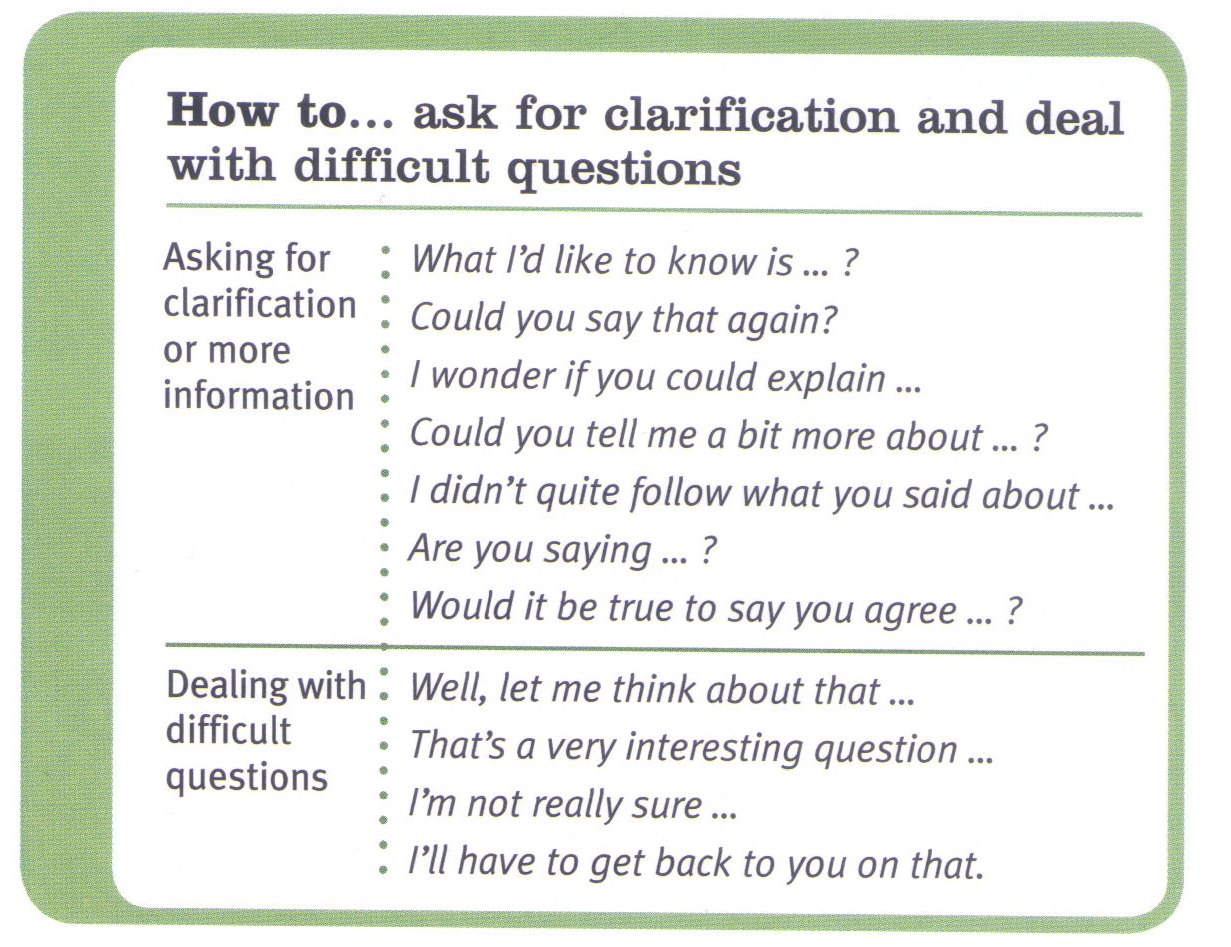
From New Total English Intermediate- Pearson 2011

A common feature in many coursebooks is the ‘Useful Language’ box. This is usually a collection of phrases which the authors consider may be useful for an upcoming speaking activity. A ‘useful language’ box is potentially a great idea because the tendency in speaking activities can be for students to simply stay safe and just use what they already know. Providing this language gives us the opportunity to scaffold their learning and encourage the learners to stretch themselves a bit.

However, in practice, there are two recurring problems.

  1. What do you actually do with the Useful Language box? Just getting students to read through it certainly isn’t enough to get them using the language.
  2. There seems for many students to be a reluctance or inability to use the language straightaway (see this recent conversation on Pearson ELT Community). And if they don’t use it straightaway, what are the chances of them locating and using it at a later date?

I think most people would agree that for students to use new language:

– They need to process the language in some way, work with it, not just be shown it.

– They need to know exactly how to use it in and in what context.

– They need to need to use it.

A good place to start with ‘useful language’ is by having it come out of a recording, rather than just being on the page. With the example above, from New Total English Intermediate, students have been listening to a short presentation, with follow up questions, and, after carrying out other comprehension based tasks, they listen again and tick the phrases they hear being used. They then prepare and give their own mini-presentations.

This approach works in terms of providing context, and it also means that there is a model for pronunciation, which is often very important with functional language (more later). However, there is still, I feel, something missing between identifying the phrases and being expected to use them.

Contextualisation

If the ‘useful language’ came from a recording, students will already have some idea of how they can be used in context. If not, you will, I think, need to provide some. Live listening can be good way of doing this (see my previous post for details). Essentially, you provide the model, ideally recording yourself so that it can be replayed. With the example of useful language given here, you might ask a confident student to give a short presentation on a very familiar and unthreatening topic and warn them that you will ask lots of questions! You can then play the recording back and start to work with the language, as discussed below.

Other ideas for processing the language

Categorisation

Exactly how you do this obviously depends on the language, but, for example, with the language box above, you could ask students to divide the first section into phrases to use when you don’t understand, and phrases to use when you want more information. If the categories aren’t clear-cut, so much the better as this will force students to discuss why they have chosen to put a phrase in that category- and thus create more processing.

Phrase completion

Useful language boxes often have phrases with elllipses (…….), so that students can complete them however they choose. Fine, if they have the faintest idea how to complete them! So, one task could be to give them a context, and ask them to write a completion for each phrase. For example, with this useful language box, you could give a short talk yourself, or use the recording, or use a short video and ask students to prepare questions using the stems. This will also help you to see whether they are able to use them grammatically. As an example, I think many students might struggle with completing ‘What I’d like to know is…’ because of the emphatic structure used.

Dictation

Rather than showing them the useful language box, try closing the book and dictating the phrases. You could add some challenge by mixing up the phrases and asking them to decide where in the box they belong (in this example, in ‘Asking for clarification or more information, or in dealing with difficult questions)

You should make sure that you dictate the phrases in a natural way, as complete phrases, with appropriate intonation, and normal features of connected speech. This will then have the added bonuses of providing a further model of how to say the phrase, and raising awareness of connected speech. For example, some students may well write down ‘What I like to know is..’, rather than ‘What I’d like to know is..’, giving the opportunity to focus on the ’ ‘d’ they didn’t hear.

Writing dialogues

You may have noticed that the activities so far are more focused on writing than speaking, which may seem odd when these phrases are provided for a speaking activity. However, writing can be a good way of bridging the gap between new language and speaking. In ‘How to teach Speaking’, Scott Thornbury points out, ‘Inevitably, because of the constraints placed on mental processing by the demands of real-time speaking, learners tend to rely on a very narrow repertoire of memorized expressions in face-to-face interaction…it may sometimes help to reduce the processing demands on them..one way of slowing down processing is to turn the speaking task into a writing one.’

The following two ideas both come from this book:

–          Paper conversations. Learners have a conversation, but, instead of speaking, they write the conversation on paper. The teacher can then easily monitor and make suggestions for improvement.

–          Rewriting. Students can be given a simple dialogue and asked to rewrite or modify it to use the new language.

Work on pronunciation

As mentioned above, pronunciation is particularly important in using functional-type phrases. They need to be delivered fluently, as a chunk, or they are likely to sound a bit odd and artificial. Intonation is also often extremely important. Think about the phrase, ‘Are you saying…?’  This needs to be delivered with the right intonation, or it could sound pretty aggressive!

So students need a good model- either a recording, or the teacher- and they need to practise drilling the phrases, getting their tongues round the connected speech and using the right intonation.

A fun way of working on intonation is to ‘say’ the phrases using just ‘Mmmm, mmmm’. Students have to guess which phrase you are saying. As they become more confident, they can do this themselves in pairs.

Using the ‘useful language’ in a speaking activity

After time spent processing and preparing, students should be much more likely to use the language in a follow-up speaking activity anyway. However, there are a few ways to encourage this further.

– As described by Antonia Clare in the Pearson ELT discussion I mentioned earlier, you can write phrases on cards and hand out a few to each student. They need to try to put ‘their’ phrases into the conversation as naturally as possible. If the other students feel it wasn’t natural, they could have to take the card back.

– A certain amount of pressure, such as recording the conversation or giving a presentation to the class can encourage students to focus more on using the new language.

– Similarly having an observer in the group, whose job it is to notice when people use the ‘useful language’ can help to focus the mind.

– Depending on the language and the teaching context, students can be asked to go away and ‘notice’ any of the phrases being used in conversation over the next week (on TV, eavesdropping at the bus-stop etc).

10 Comments

Filed under Different ways to use a coursebook, Speaking, Vocabulary