Tag Archives: esol

‘Real world’ writing activities

2051756510_c0138daf6e

‘We don’t just ‘read’ and ‘write’: we always read and write something for a particular purpose, in a particular way, in a particular time and place.’

David Barton

Outside the classroom, any writing our learners do will have a specific purpose and context. Inside the classroom, by definition, any writing is likely to be more simply for the sake of developing skills and language, and displaying those skills.

However, the difference between ‘real’ writing and display writing isn’t a binary distinction; it’s more of a continuum. Our job, as teachers, is to bring the two ends of the spectrum closer together, and help students to see the links.

How much do you know about the purposes for which your learners need to (or aspire to) write in English?

Obviously, if your learners are in an ESE (English-speaking environment), they are likely to have many pressing needs, such as form filling, work-related paper-work, emails, notes to school and so on. There are literally endless ways in which these learners can carry out real-world writing tasks, including writing to local papers, to their MPs and so on. Even in NESE contexts, learners may well need to use written English for work, especially with the growth of the internet and the increased tendency to communicate in writing.

For younger learners and most General English learners in NESE contexts, however, they may not have a current need to write in English at all, but it is still important for writing to be clearly contextualised, and have an audience. We don’t speak without any sense of who we are speaking to, and neither should we write in that way.

That said, I don’t believe that all classroom writing activities have to connect directly to the real world. The important thing is that the activity has a significance or personal value for the learners and that they know why they’re doing it. In the next few blog posts, I’d like to look more closely at some different ways to support learners in developing their writing skills, looking at genre-based and process-based approaches. All of these will, of course, have a purpose and an audience, but not necessarily an actual, immediate real-world one.

Writing for the public can, however, be extremely motivating. Below are some ideas to try, which would work with learners not in an ESE. Feel free to add anything else you’ve tried in the comments, it would be great to build up as long a list as possible:

  •  Writing to a favourite author. Many authors now have blog pages or other ways in which they can be contacted. Learners could choose their own author (which might be someone they have only read in translation), or this could be part of a class extended reading project.
  • Writing a review of a product, film or book on a website. From being a rather unnatural task, writing a review is now something that many people do regularly on sites such as Amazon.
  • Writing on behalf on victims of human rights abuse. Assuming this is appropriate in your context, this is a very real-world writing activity and could really make a difference in the world. See the Amnesty website  where you will find sample letters and advice.
  • Writing fiction for the internet. How about writing an 140 character story for Twitter [#140novel]? Or use one of the many websites where you can publish short stories, such as www.booksie.com? For younger learners, try Littlebirdtales,  where learners can create a picture story which is then emailed to specific friends and family, rather than being open to the whole internet. Or, a personal favourite, www.futureme.org.  On this site, people write letters to themselves to be delivered on a specific date in the future. Still a real audience….
  • Comments on news articles and opinion pieces. Most newspapers now have online version where readers can comment. A particularly good source is the BBC, which asks specifically for comments in the Have your Say section. For example, this article and comments on ‘Invisibility cloaks: will we ever really have them?’


 

10 Comments

Filed under Teaching methodology, Writing

Mindfulness for students (with no tibetan bells or yoga)

In my previous post I gave a brief overview of what I think mindfulness is, and how it can be beneficial for teachers. As I think it can be beneficial for everyone, obviously, there are applications for students as well.

While I do believe that our remit as teachers can be wider than simply teaching language, I don’t think it is the teacher’s role to therapise the students, nor are most teachers in any way trained or prepared for this. That said, most teachers don’t have a problem with encouraging students to develop self-evaluation skills, and mindfulness can be seen as simply an extension of this.

Perhaps the central focus of mindfulness is the focus on the present moment. This doesn’t mean that you somehow aren’t allowed to think about what’s just happened or about to happen, but that you shouldn’t be so caught up in the past or future that you aren’t really ‘here’. So an activity where you describe a memory is absolutely fine; thinking about what you’re going to have for tea tonight while your partner talks to you about their memory, not so much.

Clearly, it is in the interests of learning for students to be fully present in the classroom, so how could this be facilitated?

Start the class right

In my last post, I mentioned the importance of starting the day right. The same principles can be applied to a class. It’s really important to start the class with everyone fully focused. Some ideas for facilitating this, from Mindful Teaching and Teaching Mindfulness

–          For young learners, start with a song or jazz chant or clapping game.

–          Take out something really interesting to look at and gradually pull in everyone’s attention

–          Read something really interesting aloud

–          Start with a riddle or puzzle

–          If learners are engaged in discussing something as they come into class, start there.

[And there was another idea involving using a Tibetan bell….but I promised EBEFL that I wouldn’t mention anything like that ;)]

Awareness

In this excellent post, Kevin Stein writes about keeping a real time journal- a reflective tool  where he jots down notes about what is actually happening in the class as it happens. This helps him to make decisions about what to do next- in essence it’s a tool for focusing on the present.

The same kind of activity can work very well for students, and is a good short activity for early finishers. Rather than drifting off, ask them to write a few sentences about what they notice happening in the classroom and/or about what they are feeling. This might give you an insight into the class or the student from a different angle- unless the student wants to keep what they have written private.

Or you could occasionally carry out more extended noticing tasks. For example, the dogme activity, the Sounds of Silence, from Teaching Unplugged, where the class simply listens in silence for one minute to whatever is happening around them (open the windows or door) and then discusses what they heard.

A classic mindfulness activity (originating, I think, with Jon Kabat-Zinn)  is to eat a raisin, with complete attention. For example:

Pick up a raisin and hold it in the palm of your hand. Look at it. Examine it. Describe the raisin. What does it look like? What color is it? How would you describe the texture? Now, feel the raisin in the palm of your hand. What does it feel like against your skin? Pick it up with your other hand. What does it feel like in your fingers? Is it slimy? Rough? Smooth? Soft? Hard? Squeeze it softly. What do you feel? Smell the raisin. Describe how it smells. Put the raisin in your mouth, but do not eat it. What does it feel like on your tongue? What does the texture feel like now? How does it taste? How does the taste compare to the way it smelled? Move it around in your mouth and notice every aspect of the raisin. Bite the raisin and think about what you taste. Now how does the raisin feel in your mouth? Finish chewing and eat the raisin. How did it taste? Describe the experience of the raisin.

This can work really well in class-students listen, carry out the activity and then write about the experience. Of course, you could do it with any activity- not just eating a raisin!

Dialogic teaching

Any approach, such as Dogme, where the emphasis is on real-time communication between the people in the class, will naturally promote being in the present (even if you’re talking about past experiences). If students are fully involved and engaged, they are present.

In this way, most teachers will, of course, already be promoting mindfulness with their students, and will be in a mindful state themselves whenever they are completely engaged and ‘in the flow’.

However, even in this kind of dialogue, we are not always in the present. Tim Lott puts this very well in a recent Guardian article:

In our western relationship with time, in which we compulsively pick over the past in order to learn lessons from it, and then project into a hypothetical future in which those lessons can be applied, the present moment has been compressed to a tiny sliver on the clock face between a vast past and an infinite future. Zen, more than anything else, is about reclaiming and expanding the present moment.

We talk about ‘teachable moments’, and it is my experience that the more fully engaged people are, the more teachable moments appear. So, conversation with students can, I believe, be taken deeper, and made more memorable, by asking questions which bring students back to now.

  • How do you know that is true?
  • Can you think of any situations in which that might not be true?
  • Is there another way to see that?

This doesn’t mean that you are saying that what they believe isn’t true, by the way, just that you are getting them to think about it again, from a fresh viewpoint.

Emotional response

A central part of awareness is being aware of emotions and feelings. Fiona Mauchline recently wrote a wonderful blog post about getting in touch with emotions as a way of making language more memorable.

We learn language when it becomes ‘salient’ for us, and an emotional response is a big part of that. A lesson on what makes you happy, by @designer lessons, had a profound effect on a class I taught, both emotionally and in terms of the language they seemed to retain.

Similarly, you could have a lesson about what things make people feel angry (bearing in mind the questions under dialogic teaching above).

In mindfulness, however, there is an important distinction between being aware of emotions, and believing that the emotion IS you. Mindfulness works on recognising the emotion, accepting that you’re experiencing it (rather than suppressing it), but seeing it as a passing event, like feeling hot or cold. They’re just sensations in the moment, and will pass.

The element of surprise

You can’t learn if you’re not awake , said Kevn Stein in another blog post you should check out. He was talking about introducing elements of surprise or challenge to wake students up. Mindfulness, far from being a passive kind of drifting off, is all about being awake, really awake.

So, ultimately, anything which (gently) pulls students (and teacher) awake and in touch with what is actually happening right now, is mindfulness. With this in mind, I’d argue that it’s easy to see how mindfulness applies to the classroom, as much as any other part of life.

For Phil Longwell talking about mindfulness on the #ELTchat podcast see http://eltchatpodcast.podomatic.com/

If you’re interested in mindfulness, check out my new website, www.life-resourceful.com


14 Comments

Filed under Teaching methodology, Working with groups

Mindfulness for teachers

What mindfulness is (and is not)

Mindfulness is a term that is becoming increasingly familiar to many people, but it is still not that clear to many, I think, what exactly it means. Mindfulness isn’t about drifting off into your inner world; it’s more about being fully conscious, really aware of what we’re doing and feeling, right now.

Most of us spend most of our time only dimly aware of what’s happening for us right now. We are usually too busy making future plans, worrying about stuff, remembering things and reacting to situations based on what we think we’ve learnt in the past.  Our mind is crowded out with all sorts of stuff.

However, mindfulness isn’t about having an empty mind; it’s about being focused.

Why mindfulness for teachers?

For many people, myself included, one of the great attractions of teaching is that it can be so absorbing that I often find myself in a state of what Csikszentmihalyi calls ‘flow’. When we are totally present in the classroom (or anywhere else), time goes very quickly and we are really in a state of heightened awareness, feeling alert and alive. Communication flows easily between us and others and everyone seems to be really focused on the experience of learning. This is a very enjoyable form of mindfulness, and it can be encouraged by developing our own mindfulness practice outside the classroom.

Mindfulness , flow, feeling connected  is not so much something that we have to acquire, as something which is always there, but that we tend to be very good at blocking out through anxiety, fear, anger, mind-chatter, judgements and so on.

The more we practice mindfulness, the easier it is to connect to that peaceful place when we’re under pressure, students are playing up, the lesson plan isn’t working and so on.

Mindfulness helps us to be able to respond to a difficult situation calmly, rather than a knee-jerk reaction of feeling angry with ourselves or the students, or feeling that we’re not good enough or whatever our particular ‘favourite’ reaction might be.

Rather than feeling exhausted and drained at the end of a class, we’ll feel energised and alive (and so will the students).

Techniques to develop mindfulness

A key personal discovery is how important it is to start the day right. That doesn’t mean you can’t get things back on track, but it seems to really help to start by getting into the right frame of mind. How you do this is a matter of individual choice, of course: meditation, a brisk walk taking full notice of nature around you or simply setting your intention for the day- reminding yourself to stay in touch with what’s actually happening, take proper breaks, eat well, or to be kinder to yourself etc.

Whenever you remember (and don’t beat yourself up for forgetting, because you will most of the time), check in with what’s actually happening, and how you are feeling. When those feelings are negative, don’t deny or suppress them- just notice them and accept them (rather than telling yourself you shouldn’t feel that way), and most of the time they’ll just fade away. When they don’t, you can put them to one side until later and then try a bit of pillow bashing, talking stuff through, writing it all down and so on. But remember that your thoughts aren’t necessarily true- they’re just thoughts. This may help you not to get too caught up in the drama of it all.

Every so often (decide when in advance), take a few minutes to just breathe and become aware. I like to go for a short walk outside.

There are several excellent books on developing mindfulness which I would recommend for developing your own practice:

Mindful teaching and teaching mindfulness – Deborah R. Schoeberlein

Mindfulness: a practical guide -Mark Williams and Danny Penman

Mindfulness for beginners: Jon Kabat-Zinn

Any of these books will guide you through exercises designed to help build your inner resilience, dissipate stress, help you to be in the ‘flow’, help you deal with difficult situations and students and generally greatly improve your quality of life.

In my next post, I’d like to look at how you can encourage mindfulness from your students- in ways that won’t feel too different from what you already do, but that may make a difference to the quality of learning.

Other blog posts on mindfulness related topics:

http://tpstefltravels.blogspot.co.uk/2012/10/mindfulness-elt-chat-summary.html

http://itdi.pro/blog/2012/05/14/working-with-difficult-students-chuck-sandy/

http://malingual.blogspot.co.uk/2012/10/a-note-on-mindfulness.html

If you’re interested in mindfulness, check out my new website, www.life-resourceful.com

7 Comments

Filed under Teaching methodology, Working with groups

Task repetition: helping students to improve accuracy,repertoire and fluency

I am very far from being a fluent Polish speaker. In fact, after four years of hard study and living in the country, I was still probably only about B2 level. However, if you happened to hear me chatting to a taxi driver in Polish, you’d probably conclude I was pretty fluent.

I was very good indeed at the basic chitchat of where are you from, how long have you been in Poland, what do you think about Poland and so on. And the reason I became so fluent (in this context)? ….I caught a lot of taxis.

In other words, I had plenty of opportunity for task repetition. In language learning terms, task repetition is a term most often related to task-based learning. Perhaps one of the key articles about this is Martin Bygate’s Effects of task repetition: appraising the developing language of learners. In this article, Bygate suggests several benefits to getting learners to repeat a task:

  •  More fluency in terms of pausing and speed (less need to plan as we speak)
  • Fewer false starts and self corrections
  • Fewer errors

These reasons seem fairly self-evident, and you could say exactly the same things about drilling a dialogue. However, while I also think there are benefits in simply repeating or drilling, task repetition is about more than this. Bygate suggests that once the speaker is more familiar with the content, this frees them up to not simply make fewer errors or speak more quickly, but to actually pay more attention to how they formulate their meaning.

In this article, Bygate demonstrated (admittedly with a small sample), that repeating a simple speaking task (in this case describing a film), without any input or feedback, still led to the learner producing more appropriate and more complex language. They improved in terms of accuracy, repertoire and fluency.

Since then, further research has confirmed that task repetition does indeed have a positive effect on complexity and fluency, though some feel that learners may also need feedback on the first task (instinctively, I would tend to agree with this).

So, how can we start to build in more task repetition without boring students? The first thing to say, perhaps, is that I think the idea that repeating a task is boring, may well be a projection from the teacher. If a student is really engaged in a task, and struggling (in a good way) with getting meaning across, it won’t be boring, but satisfying. See this article  for a piece of research which set out to prove this.

In repeating speaking activities, I would suggest:

–      Play about with giving feedback in between repetitions. Sometimes you could give immediate feedback, with examples you have noted while monitoring. Sometimes you could make notes then use these notes to plan a short teaching session in another lesson, before a task is repeated. Sometimes the feedback could be self-evaluation (especially if students are able to record themselves) or peer feedback.

–      Try repeating the task at different time intervals (immediately, next lesson, next week, next month) and see what difference it makes. Again, recording both versions can be very helpful so that students themselves can be helped to notice improvements.

–      Change the audience for the task. This could just be telling the story again to a new partner (which makes it more genuinely communicative), or it could be moving from 1-2-1 to speaking to a larger group, or from speaking to a live group to recording the talk (using Vocaroo or just a mobile phone).

–      Change the task slightly. Choose a new task which has enough parallels in terms of structure and likely language for students to benefit from repetition, but enough difference to keep up the interest. For example, asking students to retell a narrative from the point of view of a different person involved in the story (same events, different perspective)

And, of course, task repetition does not always have to be about speaking. All the above points could equally well apply to writing. We have more time available to process when writing, so combining writing and speaking can work very well too. First students tell and then they write- or vice versa.

And it can even apply to receptive skills work. See this post, for example, on repeated reading.

Please feel free to add other task repetition ideas- I’m sure the possibilities are endless.


20 Comments

Filed under Different ways to use a coursebook, Speaking, Teaching methodology, Vocabulary

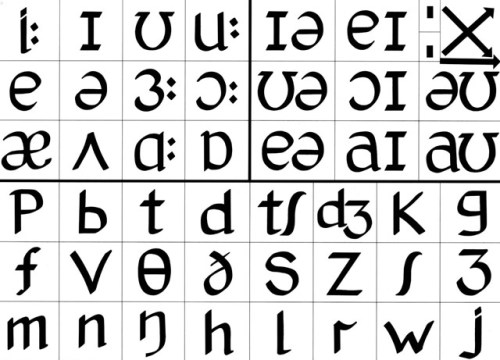
Using the phonemic chart- or not?

Love it, hate it, feel guilty about it…or just mystified?

The first #ELTChat on Twitter 7th November 2012 discussed the phonemic chart (and script) asking ‘Do you use it? Why/why not? And how?’

There were quite a few participants who fell into the ‘love it’ category:

@worldteacher ‘I’m a huge fan of the phonemic chart and use it in every lesson.’

@BobK99 ‘Can’t see how anyone can teach English effectively WITHOUT IPA.’

@Julian_L’enfant ‘I use the phonemic chart with learners of all ages. An excellent resource & important for learner autonomy.’

Others, such as @teflerinha, @KerrCarolyn , @TEFL Geek , @jo_cummins, @sueAnnan  who like using it, but perhaps in more of an ad hoc way.

And those who didn’t use it, such as @bnleez, @michaelegriffin, @theteacherjames and @garyJones 01 (who preferred to use rhymes and tonguetwisters)

So the stage was set for a good discussion from different angles, though there were probably more people in favour of using the chart than against. The arguments on both sides are set out below.

Overwhelming, intimidating?

It’s complicated, takes time and students don’t know it (@michaelegriffin)

@bnleez: Pronunciation varies to such a degree, I find the Phon. chart would cause more confusion for learners than it needs to be

I found it intimidating as a new teacher, so what about students? (@jo_cummins)

Agree it can be overwhelming for ss and worse for ss without Roman alphabet perhaps? (@teflerinha)

Or empowering?

But using symbols empowers students (@worldteacher)

If trained in the chart, students can get word outside classroom and note down pron themselves (@TEFLGeek)

I agree with learner autonomy (@jo_Cummins)

Teaching in France, ‘improved pronunciation’ is one of the most common objectives (@KerrCarolyn)

I’ve found students who have followed courses w/pron more resourceful than new students entering the school (Julian_l’Enfant)

Unnecessary?

ELLs can use online dictionaries with sound files, so IPA is redundant (@bnleez)

I’m still not convinced the sts need to ‘see’ the pronunciation, just hear & reproduce it. (@theteacherjames)

Or a useful visual aid?

Students need to have constant access to internet and to already be able to differentiate between sounds (@TEFLGeek)

Great for use at home or if you have tech in the classroom – otherwise I’ll stick to paper charts & flashcards! (@worldteacher)

seeing it helps with highlighting the difference in form (@sueannan)

doesn’t seeing it help lock it into the memory? (@shaunwilden)

Some find it reassuring – identify visually what ears can’t deal with (@KerrCarolyn)

Complicated?

It’s complicated, takes time and students don’t know it (@michaelegriffin)

@bnleez: Pronunciation varies to such a degree, I find the Phon. chart would cause more confusion for learners than it needs to be

Or not so much…?

it just looks intimidating but once you start to study it it is logical. (@jo_Cummins)

Many symbols (e.g. consonants and some dipthongs) are self-evident (@teflerinha)

A restrictive model?

Does the idea of a ‘model’ (as suggested by using a uniform chart) undermine local accents & non-native teacher …(@laurahaha)

@teflerinha thought that different allophones (versions of the same phoneme) could be included in each phoneme)

There was also mention of the American IPA- see links below.

Unsuitable for learners without a Roman script, those with literacy problems or YLs?

Previous #ELTChat on similar subject made the point that study showed learning symbols made students with different alphabet more anxious (@michaelegriffin)

Interestingly my CELTA tutor told me its no problem for Korean/Japanese Ss to pick up easily because new scripts r easy (@michaelegriffin)

A new script shouldn’t be too hard. Japanese and Chinese know thousands of characters. And most consonants are the same.(@EBEFL)

@Marisa_C and @teflerinha both raised the point that it might not be a good idea for students who were already struggling with literacy (though @teflerinha would still probably use a few key symbols such as schwa)

There was also a brief discussion about YLs, and here opinion was divided.

I use it with adults but hardly use the symbols with YLs (@prese1)

When teaching YLs we’d use it as a secret code; Lee the Lion and Sid the Snake liked certain types of words.(@Julian_l’Enfant)

What does the chart or phonemic script offer in addition to the teacher’s other resources?

The teacher can model pronunciation (@bnleeez) but..

The chart can help with this as at least Underhills’ version (see link below) shows the mouth positions as well (@teflerinha)

It can really help with showing connected speech. E.g.(@harrisonmike):

/t̬ʊwæplz/

This shows the intrusive ‘w’.

@theteacher James suggested it would be as easy to write ‘tu wapples’

But others disagreed:

No- could be ‘too wapplz’ (@Marisa_C)

No, because people write things phonetically in very different ways (@teflerinha)

‘Tu wapples’ could cause spelling mistakes (@harrisonmike)

@Harrisonmike also described giving Farsi and Urdu speakers text in script to work out, and @teflerinha agreed that this was useful. For example:

Would you like to…? Could be represented as /wʊdʒə’laɪktə/, which shows how this phrase sounds in connected speech much more effectively than the words alone.

Other ways to use the chart or IPA

@Kerrcarolyn said ’11 Colour vowel sounds are great. I use the colors with kids and they love coloring words and poems’

@harrisonmike ‘good one is with minimal pairs and a maze on the board. eg. forked paths, one is 15, the other 50, or bin/bean (Pronunciation Games)– this is a link to Mark Hancock’s blog, with lots of Pron Games and activities.

@musical pass the symbol (@worldteacher)

Great activity from Arizio Sweeting’s new blog Pronunciation Central on Chasing and Tagging Phonemes (and other pron activities too)

@Bobk99 ‘s Phonemic Bingo

For a much longer list of activity ideas see the previous #eltchat on a similar subject 

Different charts

This is Adrian Underhill’s chart and blog . Also see @CGoodey’s blog entry on Adrian’s presentation and her aha moment on using the chart.

On YouTube you can find Adrian Underhill going through the chart. Part 1 is here.

a The British Council interactive char also shows sounds in words with sound at beg, middle and end . You can click to hear these and it deals with allophones – the way phonemes can be slightly different in these different places.

@julian_l’Enfant suggested Celce-Murcia Brinton & Goodwin’s for an American English chart (there is also one on Adrian Underhill’s blog, link above)

@ElaWassell gave the link to Macmillan’s The sounds app

@michaelegriffin gave us a link to five charts, including the two above.

@harrisonmike shared a link to a tool which will transcribe into IPA for you (not perfectly)

Other Links

This is the most useful pron site I’ve found– really helps for teaching HOW 2 make the sounds (@phil3wade)P

Phonetic typewriter which might come in handy for worksheets.  (@EBEFL)

Cambridge has some awesome phon games (@Marisa_C)

Useful blog post from @clil2climb about teaching pronunciation (@ElaWassell)

@cybraryman1 My Pronunciation page Phonological Awareness  

#ELTChat takes place every Wednesday at 12pm and 9pm UK time. Do join us!

12 Comments

Filed under ELT Chat summaries, Pronunciation

To read better, improve your pronunciation?

To read better, improve your pronunciation….

This statement jumped out at me recently, from an excellent post by Robin Walker on Pronunciation for YLs. He was reporting from a talk by Catherine Walter at IATEFL 2008, and reading this (perhaps surprising) statement sent me off to find her original research.

In her article Phonology in second language reading: not an optional extra, Walter questions the idea that the skill of reading is something which needs to be taught to second language learners. She argues that successful L1 readers already possess the cognitive skills needed to build a mental structure or representation, which is, in fact, what we mean by ‘comprehension.’ According to Walter, comprehension isn’t actually a linguistic skill, so it’s fruitless to talk about transferring it from L1 to L2.

So why are some learners competent at reading in L1, but struggle with reading in L2? Obviously, lack of linguistic knowledge plays a part. Fascinatingly, though, Walter cites a study (Robertson et al 2000)* which used MRI scanning to show that sentence comprehension and comprehension of a text as a whole take place on different sides of the brain.

Walter doesn’t mention this, but, of course, there has been a lot of speculation about left brain and right brain thinking. Interestingly, sentence level comprehension, or decoding, used the left frontal lobe (associated with analytical, logical processing) and text comprehension uses the right frontal lobe (associated with intuition).

So a learner may have effective (non-linguistic) comprehension skills, and even be able to decode L2 sentences, but still struggle. Why?

According to Walter, it may be to do with how we use our working memories. Part of the working memory is something called the phonological loop:

‘a short-term memory mechanism that stores information in phonological form and automatically rehearses that information by unconscious sub- vocalisation.’ (Walter 2008)

In other words, as we listen, we automatically ‘record’ the last two seconds of what we hear in the memory, like a little Dictaphone. It’s why we can repeat back what we have just heard, even if we weren’t really listening properly to the speaker.

There is also evidence that we do exactly the same thing as we read- that we also sub-vocalise and record the sound of what we are reading. We don’t see it, we hear it.  At least, this is true for those of us with L1s that are alphabetic (there is some evidence that learners with non-alphabetic L1s, may use more visual representations).

However, if our phonological representations of what we have just read are unreliable, we may find it difficult to associate these sounds with meanings, and thus find it difficult to keep meaning in our short term memory. This, in turn, will make it harder for us to carry out meaning building processes on the text as a whole.

Walter’s research in this paper concludes that unless learners are also poor at comprehension in L1, we would be better off teaching them to improve how they ‘mentally represent spoken language’ than teaching comprehension skills.

Some suggestions:

As much exposure as possible to the spoken language- so lots of listening and watching videos in English.

Listening while reading – hearing the spoken version while reading a text. This could mean using sub-titles, or following a transcript while listening, or listening to an audio version of a written text while reading. I would suggest that these don’t have to be instead of our usual listening or reading activities (I’m not quite ready to throw out more traditional reading and listening procedures), but as a follow up.

And finally, explicit focus on features of pronunciation, such as minimal pairs work , and focus on word stress and on how words change in the stream of speech . This kind of work will help learners to develop a more reliable repertoire of L2 sounds, which, Walter suggests, could also help them to hold what they are reading more efficiently in their short term memory, which in turn will greatly help with building up the meaning of the text.

And even if this isn’t the case, it will certainly help with developing fluency in speaking and confidence in listening, so what have we got to lose?


 * Robertson, D. A., Gernsbacher, M. A., Guidotti, S. J., Robertson, R. R. W., Irwin, W.,Mock, B. J., et al. (2000). Functional neuroanatomy of the cognitive process of mapping during discourse comprehension.

Psychological Science, 11, 255–260


9 Comments

Filed under Different ways to use a coursebook, Pronunciation, Teaching methodology

Adapting ELT resources for ESOL

With thanks to @senicko and #eltpics

I was really sorry to miss the recent Twitter chat under #ukesolchat , not least because it’s a pet topic of mine! It looks to have been an interesting discussion, and there were plenty of different views aired. However, I don’t think anyone really made much of a case for using coursebooks, and I think there is often a rather knee-jerk reaction against using them in ESOL contexts. I hasten to say that this wasn’t apparent in this chat, but it is a common perception.

As you may know, a large part of my ‘job’ these days involves writing coursebooks, so I admit to a bias. But my convictions don’t come from this, but from 10 years teaching ESOL in an FE College, and a further three years training ESOL teachers from a wide variety of contexts, at Warwick University.

I would never argue that an ELT coursebook should form the syllabus for an ESOL course. It’s obvious that some of the material will be unsuitable or inappropriate, and many good points on this were made in the twitter discussion I mentioned. A lot of coursebooks (and I’ve written some) are specifically designed to be ‘aspirational’, which means they refer to foreign holidays, the latest technology and so on. There may be culturally inappropriate topics, such as dating or divorce. There will probably be topics about family, childhood or home, which may bring up painful issues for refugees. There may be (who am I kidding, there will be) an assumption that the learners’ literacy skills are at the same level as their listening and speaking skills. There will probably be an emphasis on grammar rather than functions (which is one of the reasons I agree with @SamShep when he says that older coursebooks are often better for ESOL)

So, no, I wouldn’t suggest taking a coursebook and using it willy-nilly (and that goes for any context).

But, …there will also be a lot of activities that will work perfectly well just as they are, and/or that can be adapted. Coursebook writers generally have a lot of experience, and can write materials which work, and which have been through a long process of being written and rewritten after feedback from editors and often focus groups of teachers as well.

Writing all your own materials is very time-consuming, it can lead to a lack of variety, and it isn’t that easy. In my experience, a lot of ESOL teachers (present company probably excepted) have not had much training in either language awareness or materials development (a point also made in the discussion), and they may well struggle to produce materials which are pitched at the right level, deal with language accurately and clearly, and which flow well. I have observed a lot of teachers using a series of unconnected worksheets printed from websites, or authentic articles which are waded through slowly and painfully. Using a coursebook as a basis can be a good way of learning to produce your own materials, as you see how activities can be sequenced effectively. It’s certainly how I learnt.

Specific ideas for adapting ELT materials for ESOL

The first point being, if an activity is really unsuitable, obviously, do something else instead!

But if it has potential..

Reading/listening

  • If your students have low levels of literacy, but better listening skills, then why not read a text aloud to them instead of making them read it?  You should be able to significantly aid understanding through intonation, mime, quick comprehension checks and so on.
  • Differentiate texts by setting different questions (the more closed, the easier), or use them as a dictation and remove more words/chunks for more confident learners.
  • Replace unsuitable texts with something more appropriate, but which covers similar vocabulary/functions. For example a text about dangerous sports which highlights ‘Have you ever?’ could be replaced by you telling the students about something unusual you have done, that is still within their experience. This means you can probably still use the follow-up activities.
  • Use the recordings to work on decoding skills, rather than just comprehension questions.  This can be a stepping stone to work on more challenging authentic listenings and videos.
  • Let students look at the transcript while they’re listening. This can be really helpful in raising awareness of the sound-spelling relationships in English, and it’s something you usually can’t do with authentic material.

Language focus

  • Use the grammar exercises selectively, when students have demonstrated a need for a particular language point to provide practice, rather than feeling you need to work through the grammar syllabus.
  • Make good use of functional language, as this is often far more relevant for ESOL students than it is for the majority of the book’s target users, living in a non-English speaking community.

Speaking/writing

  • Use the communication activities/tasks as the basis for a Language Experience Approach activity, where students work together to create a text about the activity they have carried out. This text can then be used as the basis for future work.
  • ESOL students may be less likely to need academic style essays (though some will of course), but there are usually plenty of practical writing activities. For example, in any PET level  coursebooks, students will learn how to write emails to friends with a variety of functions- apologising, thanking, inviting. And why assume that ESOL students don’t want to write creatively?

So, while recognising all the drawbacks of the ELT coursebook in an ESOL context (or rather different ESOL contexts), can I make a plea not to chuck out the baby with the bath-water?

4 Comments

Filed under Different ways to use a coursebook, Teaching methodology

Do something different with the coursebook listening

When teachers talk about ‘doing a listening’, what they usually mean is that they will set the scene, pre-teach as (and if ) necessary, then set some questions before pressing play.

This kind of teaching routine can work very well, and I’ve certainly written plenty of listening sections following that kind of format.

However, in the spirit of John Fanselow, I also believe that it is always a good idea to question such routines, and consider how we could do things differently.

Listening from the middle

In this article (thank you to Frances Eales for drawing it to my attention), John Madden explains how, rather than playing a recording from the beginning, students can benefit from starting in the middle. In real life we often start listening in the middle of a conversation, or when we turn on the radio or TV in the middle of a programme. Starting in the middle helps learners to develop the confidence and skills to deal with this.

Madden starts by discussing times when learners have ‘started in the middle’ in real life and then plays a section from the middle of the recording. Learners tune in as best they can, then discuss with a partner what they understood, and what they think might have been said before they started listening. They can then listen to the entire recording to check their predictions.

Pausing and predicting

Rather than always beginning by asking students to predict the content of a recording, another way of encouraging prediction might be to pause the recording while playing and ask for predictions.

There are several ways I can think of to do this:

1. If the recording is a dialogue, stop the recording after each utterance by person A, and ask students to either say, or write down what they think person B might say. They can then continue listening to check their ideas.

2. Stop the recording about halfway through, and ask students to either continue the conversation they have been listening to, or, if a monologue, to write down what they think the person will say in the rest of the talk.  This could work very well with a well-signposted monologue of the kind found in more academic English

Pausing and focusing on language

These activities would work better after using the comprehension activities in the coursebook, as a way of encouraging students to notice certain aspects of language. For more on this kind of bottom up activity, you might like to read John Field, and my article on Decoding Skills

1. Having previously picked out some useful expressions from the listening, pause the recording halfway through the expression, and ask students try and complete it from memory.

E.g. I had to learn the poem……by heart.

2. Using only a short part of the recording, pause at the end of each sentence or longer phrase, and ask students to write down what they hear. This can work really well for identifying students’ difficulties in decoding connected speech.

3. Pause the recording after referring expressions and ask students to identify what they refer to.

E.g. Albert Einstein is widely considered to be a genius. However, his education did not start off so well (pause-who does his refer to?). He didn’t learn to speak fluently until six or seven and one of his teacher wrote on his school report (pause-who does his refer to?) ‘He will never amount to anything.’, meaning he would never be successful. How wrong he was! (pause- who does he refer to?)

[extract taken from New Total English Intermediate]

Focusing on strategies

Rather than providing a follow-up related to the content of the text, you could carry out a protocol activity. After carrying out your comprehension activity, play the recording again and ask students to write down (in L1 if lower level students), as far as they can remember, what they were thinking at each point of the listening. What exactly did they understand or not understand, what strategies did they use, did they switch off (when and why?). This can then become the basis of a fruitful class discussion about how to listen.

To finish, you might like to watch this short (7 minute) TED talk by Julian Treasure, on How to listen better. It isn’t specifically about ELT listening, but it’s an inspiring reminder of how doing things differently can indeed lead to something exceptional.

16 Comments

Filed under Different ways to use a coursebook, Exploiting authentic recordings and videos, Listening, Teaching methodology

Developing complexity through a focus on form

In a recent IELTS exam, I had to assess someone who lived locally, with a British passport. I’m not sure if she could have been called a native speaker, but I’m pretty sure that most people meeting her would have made that assumption. She had a local accent, and her language was pretty fluent. It was also mostly accurate. However, what was missing was complexity.

There was a lot of repetition, using the same simple phrases again and again. She tended to use mostly present tenses and simple linkers, such as and, but and because. Overall there was a tendency to avoid more complex sentence structures. She produced language confidently and with ease, didn’t make many mistakes, but still couldn’t be said, I thought, to be producing a ‘full range of structures’ or to be using vocabulary ‘with full flexibility and precision ’.

If we focus solely on achieving communication, some students will stay stuck at a certain level of complexity. Therefore we also need to provide opportunities for students to focus on form.

In his article, Accuracy, fluency and complexity (2000), Scott Thornbury looks at the traditional PPP (presentation-practice-production) model and makes the point that complexity was supposed to be targeted in the first presentation stage. Students have their attention drawn to a particular language point, and then get the opportunity to use it.

Thornbury says that there is ‘a growing belief that restructuring is more likely to occur during practice activities.’ Instinctively, this feels right to me. I think those ‘aha’ moments definitely tend to occur more when students are actually doing something with the language. However, I also like the way that Jack C Richards puts it in Moving Beyond the Plateau:

‘For learners’ linguistic systems to take on new and more complex linguistic items, the restructuring, or reorganization, of mental representations is required, as well as opportunities to practice these new forms (the output hypothesis). Ways of increasing the opportunities for restructuring to take place can occur at three different stages during an activity: prior to the activity, during the activity, or after completing an activity.’

 So, what can we do at each of these stages to help learners restructure and complexify language?

 Prior to the activity

While I think that students have to be interacting with language in some way in order to restructure, I don’t think that they necessarily always have to be using it themselves. What about:

Concept checking

Sometimes seen as a weird and unnecessary hoop that trainers make you jump through on the CELTA, to be abandoned as soon as possible afterwards, concept checking can actually often be a source of those ‘aha’ moments.

A concept question tries to pin down the main concept behind a piece of language and check it. So, for example, ‘used to’. The dictionary definition (Macmillan Advanced) is ‘Used for saying what was true or what happened regularly in the past, especially when you want to emphasize that this is not true or does not happen now.’ So, the concept questions  for ‘I used to enjoy gardening’ could be..

–          Did you enjoy gardening once or regularly?- regularly

–          Do you still enjoy gardening now? – No

[Traditionally they are used in the first part of a PPP lesson, but you can, of course, use concept questions at any stage of the lesson, not just the beginning]

Giving a model

Before students carry out a speaking task, it can be helpful for them to listen to more competent speakers (whether you or a recording) carrying out the same or a similar task. You can then draw attention to some useful language they can add to their store. You could ask them to listen and pick out specific items, or they could choose for themselves. There are plenty of ways of getting students to ‘notice’ language (see this post on noticing in reading )

Planning time

Research shows that planning time will tend to increase the complexity of language used. It may give students time to dredge up language that they do know, but that isn’t yet in their easy to reach store of language. Or they may learn from each other in the planning process, or you can feed in language they could use.

During an activity

Some years ago I was teaching a class in Brazil, using Headway Upper Intermediate. There was an article about holiday disasters, which included a story about an overbooked flight. According to the story, passengers had had to run around the plane and the first ones to get round got the seats. I decided to set up a role-play around an overbooked flight. The idea was for students to come up with a good story as to why they had to get a seat, and persuade the cabin crew. Instead, the students set up a bank of chairs and started running!

The point being, if achieving the task becomes too important, language will fly out of the window (especially with teenagers).

We need to find a balance between base-line communicating (with whatever means possible) and being too focused on form, so that we are not genuinely communicating at all.

Performance

Introducing an element of performance can help with this. If students know that they will have to make a short presentation on their discussion, for example, this can help to focus them more on the actual language they are using. Similarly, recording the discussion for later review, can also help to keep some focus on form, without taking away the genuine need to communicate.

Repetition

We also know that repeating a task usually results in a higher level of complexity, as students become more confident with the material. Obviously we need to find ways of providing an opportunity to repeat the task in a way which makes some communicative sense- e.g. having a different audience the second time.

After an activity

This can be the very best time to focus on form, as it means that the task can’t have been compromised by too much emphasis on the language used.

Using a model

Instead of listening to a model before carrying out a task, students could listen to a model after they have done the task and notice any language that was similar to what they used, or that they could have used but didn’t. This can be particularly motivating as an interim stage before students are asked to repeat the task.

Self-noticing and reformulation

If the speech has been recorded, students can be asked to transcribe a short section of their speech (1-2 minutes). They can make any changes they wish before handing it in to the teacher. This in itself will be a valuable awareness-raising activity.

Step two, however, is for the teacher to then reformulate what each student has written, as appropriate. The student can then compare their version with the teachers’ version, providing another noticing opportunity.

If you have a large class, you could do this with 1 or 2 anonymous examples (different people each time), and look at them with the whole class.

Consciousness-raising tasks

If students are all tending to make the same kind of errors (such as problems with articles), you could note down a range of examples and give them to the students to both correct and agree on the rules.

Traditional practice activities

In the PPP model, these come before ‘production’, but there is no reason why these can’t come at the end of the lesson, after the speaking, as a way of helping to consolidate language which may or may not have been used during the speaking task.

Feedback

You can, of course, note down errors and examples of good language (to develop complexity, not just accuracy) while the task is taking place and carry out a feedback slot at the end of the class where you put these on the board and elicit corrections.

Alternatively, you could develop some peer feedback tools. Someone in the group can take the role of listening and making notes, or you could record the discussions (quite easy in these days of mobile phones). Students can then look for examples of particular language forms or particular speech acts (such as ways of encouraging others to continue). Because this is potentially quite exposing for group members, it is generally better to focus on finding good examples, rather than finding mistakes.

I strongly believe that if all we do is provide learners with opportunities to communicate, we are doing them a disservice. Our job has to be to help them to communicate more effectively, which, I would argue, involves a focus on form, at whatever stage(s) of the lesson that might be.


5 Comments

Filed under IELTS, Speaking, Teaching methodology

How identifying the different roles we play can help groups work better together

Who are you?

This may seem an obvious question, but now try getting a pencil and writing down ten different responses to that question before you read on….

…If you look at your list, you might have listed your gender or ethnicity, and there may be some adjectives such as kind or artistic. You’re likely to see a set of roles that you play: teacher, manager, parent, son or daughter.

We all play different roles in different groups, and the classroom is no exception.

You are likely to take on different roles within your role of being a teacher: facilitator, critic, guide… But what about the roles your students take within the group?

Group theory (see, for example, Communicating in small groups: Beebe and Masterson) divides roles into three different types:

Task roles: roles that help a group carry out a task

Some examples

Initiator- contributor: proposes new or different ideas or approaches

Information seeker: asks for facts or clarification

Opinion seeker: Asks for values and opinions

Elaborator: provides examples

Orienter: attempts to summarise and keeps the group focused on the task

Maintenance roles: roles that help the group work smoothly together

Some examples

Encourager: Offers praise and acceptance

Harmoniser: mediates disagreements

Compromiser: attempts to resolve conflicts

Individual roles: these tend to be counter-productive to the group as a whole

Some examples

Aggressor: puts other people down

Blocker: negative, stubborn and difficult

Dominator: tries to take over the group

It is tempting to use these roles to start labelling your favourite (or least favourite students), but in fact, roles change all the time, and people can play many different roles. The point of exploring different roles is not to stereotype people or make them feel they should be carrying out a particular role, but to help the members of a group or class be aware of how they are all working together, and how that interaction could be improved.

Activities to raise awareness of group roles

The first two ideas are both ways for students to track interaction within a small group. This can be very useful for getting an overview of how the group is working.

  1. Put the students into groups of five or six. One person observes while the others carry out a speaking task. The observer draws circles on a piece of paper to represent each member of the group. They then listen and draw arrows each time someone speaks.  If one person speaks directly to another, draw an arrow between them. If someone speaks to the group as a whole draw an arrow away from the group. If someone is speaking for more than a few sentences at a time more than one arrow can be drawn.

At the end of the task, the observer should feedback to the group on what they observed, and the whole group can discuss the findings:

–          What do you notice about the lines of communication?

–          Were the lines of communication an effective way of carrying out the task? Why/why not?

–          Was everyone happy with the way they participated?

–          What things could the group change in the future?

This task is taken from Conversation: Nolasco and Arthur.

2 A similar, but perhaps more entertaining idea, comes from Classroom Dynamics: Jill Hadfield. Rather than having an observer, the group has a ball of wool or string. The person starting the speaking task holds the end, and then passes the ball to the next person to speak. This continues until the task has finished (I’d suggest quite a short task!). The pattern of interaction will be very clear at the end, demonstrated by the web of wool or string. Or possibly the students will actually start to change the pattern of interaction as they see that they are either taking over a bit too much, or not contributing very much.

After this kind of activity, you could go a step further and actually start to look at the different kind of roles students are taking. This needs to be done carefully though, to avoid singling people out for criticism.

Jill Hadfield suggests two activities which could both be handled sensitively:

1 Using a self-evaluation questionnaire. There is a photocopiable one in Classroom Dynamics, which includes questions such as:

–          Did you contribute any ideas?

–          Did you encourage anyone else to contribute any ideas?

–          Is there any way you could help the discussion to go better….by making a suggestion etc.

She suggests carrying out a speaking task, then asking students to complete the questionnaire individually and privately, then carrying out a second speaking task and finally discussing if and how the second speaking task was an improvement on the first one. (From personal experience I can tell you that this process can be completely transformational.)

2 Observing group roles. In this activity, students carry out a speaking task and are observed. The observer ticks how many times various things (such as contributing an idea, interrupting, evaluating someone else’s idea, not talking in English) happen- but does not note down who did these things.  The group then looks at the results and decides which things are happening too often, and which not often enough. There isn’t necessarily a value judgement to these things. Contributing ideas is something we want to see happen, but if that’s ALL that’s happening, the group will not be working very smoothly! They then choose three things they should do more often and three things they should do less often.

Incidentally, although the observer in these tasks is not taking part, this can be a useful role for certain students. Students who tend to be very dominant can benefit from having to sit back and listen, and students who struggle to get a word in can benefit from having a clear role and being asked to feedback on what they observed.

6 Comments

Filed under Differentiation, Speaking, Teaching methodology, Working with groups