Tag Archives: esol

Monitoring class activities

18782750_dcb09c62f3_o

Photo Credit: madabandon via Compfight cc


Dictionary definitions of monitoring include:

To check the quality or content of something.

To keep track of systematically with a view to collecting information.

To keep close watch over; supervise.

Classroom monitoring can, I think, involve all of these aspects, and doing it well is a key teaching skill. We’ve all seen (or probably been) teachers who either breathe down students’ necks, making them desperately uncomfortable, or who wander off and start doing admin tasks at the back of the room (though the latter might just be monitoring very subtly!)

Monitoring to check the activity

As students start a task, it’s very important to check they know what they’re doing and that they are able to do it. So, although you might want to back off in order to make them feel less self-conscious, you probably need to at least subtly look around and see if people are on-task. Listen in unobtrusively, perhaps while doing those admin tasks, and make sure they’re ok. If one pair or group is uncertain about what to do, go and help them. If more than one pair or group is uncertain, I’d advise against going round and helping them all. It’ll take too long, and waste precious time for those waiting to see you. This is how I failed my O level maths (that, and too much gossiping).  Just stop the activity and set it up again. And this time, check your instructions.

This kind of monitoring is simply pragmatic, and about helping things to run smoothly. It’s most important at the beginning of a task, but you can also do this kind of monitoring while a task is in progress to see if a group have finished early, if they need more support or more challenge and so on. Especially if you’re teaching young learners, you can also assess if they are starting to tire of the activity, and if you need to swiftly bring it to a close before all hell breaks loose.

Monitoring to assess language and/or skills

The other main reason for monitoring is to assess the language the students are producing (or their skills). This is vital if you want to be able to use your skills to actually help students develop. If you aren’t listening or paying attention, how can you possibly have any idea what they can do, or what they still need help with? “If a tree falls in a forest and no one is around to hear it, does it make a sound?” Well, of course, students are still able to listen to each other, and to themselves, but I hope you get my point.

How?

Perhaps you’ve heard about the secret handshakes that Masons are supposed to use to recognise each other? There’s a secret way that trainers who were trained up at International House (IH) can do this too….they crouch. Well, maybe not all of us, but I’ve recognised a few fellow ex-IHers this way. The idea is that by getting down on the students’ level, you’re less obtrusive and threatening. I think there’s something in this, but if students aren’t used to it, it can be a bit discombobulating for them (I knew I’d get to use that word in a blog post one day!)

It also isn’t great if you’re wearing a shortish skirt.

Being unobtrusive is important, however. You could try sitting at a short distance and looking elsewhere while your ears work overtime. If you really want to freak them out, look at one pair while listening to another, and then comment on what the second pair said. In a smallish class, it can also work quite well to sit on a chair in the middle of the room and lean forward. It signals that you’re listening, but isn’t too (literally) in your face. If students are writing, you’ll need to get closer. Try walking behind as these means they don’t have to stop what they’re doing and turn their book round to show you. It also helps to learn to read at strange angles.

Try not to get too involved with a group as this means you can’t tell what’s going on elsewhere. This can easily turn into small group teaching, while the rest of the class feel ignored, get bored, start throwing paper aeroplanes…. This (small group teaching, not throwing paper aeroplanes) might be OK in some circumstances, though. For example, with a longer project-like activity, once you are SURE everyone knows what they’re doing and can work independently.

What should you be listening for?

Obviously this depends on what the students are doing. Here are some suggestions.

Speaking tasks

Are they using the language you’ve been working on in class? Bear in mind that if they aren’t, it might be because you (or the coursebook writer) hasn’t designed the task very well.

Is the language you plan to focus on already being used naturally? If not, that will provide a ‘gap’ for you to feed language into later- as in task-based learning.

Can you identify a gap, or language they need to do the task more effectively? If so, make a note, teach it at the feedback stage, and then let them do the task again.

Grammar or vocab exercises

Monitoring should tell you which students are finding it easiest, and which are struggling. How many are struggling? (Do you need to deal with this whole class or on an individual basis?)

It’s also a great opportunity to think about who you are going to nominate at the feedback stage. You don’t want to put people on the spot [unless they really deserve it ;)] by asking for answers they don’t know. It can also be  a good idea to give a weaker student a boost by nominating them when you know, from monitoring, that they’ve got the answer right.

After monitoring

As well as carrying out feedback on a task, or conducting an ‘error correction slot’ (where you write mistakes you heard on the board, anonymised and ask students to try and correct them), you could write down examples you heard of language which was particularly successful or useful.

Alternatively, you could choose not to feedback at that point, but to note down what you’ve learnt about their needs and plan a future lesson around them.

If they haven’t used the target language they were ‘supposed to be’ practising, you could take some examples of what they did say (which was correct), give praise for it, and then try to elicit other ways of saying it which do use the target language.

Or you could ask students to feedback on other aspects of the task- such as how well they worked together- and give them your own feedback on what you noticed.

If, on the other hand, you’ve just been filling in the register while they did the task, you can’t do any of these things…

If you found this post useful, why not check out my e-book, The CELTA Teaching Compendium, a quick easy reference to all the teaching skills required for CELTA. 

http://the-round.com/resource/the-celta-compendium/


23 Comments

Filed under Differentiation, Teaching methodology, Working with groups

Real Beauty? Free downloadable lesson

A free downloadable lesson based around the recent Dove advertisement, showing the huge difference between women’s views of their looks and how other see them.  The lesson starts by focusing on collocations to describe facial features, such as thick hair, full lips and so on. Students then watch the video and discuss some of the issues raised, including self -esteem, the role of the media,and differences between men and women. More language to describe physical appearance is ‘pulled out’ of the video, and the lesson ends with students writing detailed descriptions of themselves.

An optional extra that might work well to lighten the class a little  is a very funny spoof video, where some men find out that they are actually much uglier than they think they are! The link is in the accompanying notes.

The lesson is suitable from B1+/Intermediate +

Download PDF here: ELT Resourceful – Real Beauty

18 Comments

Filed under Downloadable lesson materials, Exploiting authentic recordings and videos, Listening, Speaking, Vocabulary, Writing

Short presentation of my IATEFL 13 talk: Of course! Using a coursebook AND dealing with emergent language


Image for brainshark
https://www.dropbox.com/s/mvn39lcvjkp2n35/Of%20course%20brainshark.mp4?dl=0

[Click the link below the image]

Recently there has been a focus on dealing with ‘emergent language’, rather than following a syllabus. But does this mean that coursebooks are irrelevant? Surely coursebooks are ultimately a collection of topics, texts and tasks- the bedrock of any course.

In this 20 minute presentation, I  look at some ideas for using coursebooks (or any other off the shelf material) while still allowing the teacher to facilitate and engage with emergent language.

17 Comments

Filed under Different ways to use a coursebook, Downloadable lesson materials, Exploiting authentic recordings and videos, Grammar, Teaching methodology, Writing

Am I missing something?: raising awareness of ellipsis and substitution

Photo Credit: Bob.Fornal via Compfight cc

Photo Credit: Bob.Fornal via Compfight cc

When students fail to understand something they read or hear, this often isn’t because they don’t understand the words being used. In fact, it may be because of the words that aren’t being used.

In both speaking and writing there is a tendency to either leave out words we think are unnecessary (ellipsis) or to use another single word in place of a longer phrase (substitution). This can cause considerable confusion for learners, especially when listening, as there is no chance to go back and try and work out the meaning.

It’s also something that teachers, as proficient speakers of English, often overlook. Not least because we find it complicated to explain, even though we may easily understand what the speaker or writer is trying to say.

Ellipsis

There are generally considered to be two different kinds of ellipsis, situational and textual.

Situational ellipsis is, unsurprisingly, where the situation or context makes the missing element clear. It’s informal and mostly used in conversation.

For example, ‘Would you like a cup of tea?’ can easily become ‘Tea?’ if you are waving a mug at someone, or even just sitting in the kitchen.

Textual ellipsis has more grammatical ‘rules’, and can be found in both speech and writing. It could be defined as when we omit something that has already been mentioned (so doesn’t need to be repeated), or when what is missing is clearly recoverable from the text.

E.g. I went to the bakers to get some wholemeal rolls and (I went) to the butchers for lamb chops.

Textual ellipsis is probably most commonly found in the second clause after ‘and’ or ‘but’

Reduced relative clauses and reduced adverbial clauses are also often considered to be examples of ellipsis. With these, the missing words haven’t necessarily been mentioned, but they are clearly recoverable.

E.g. The dark-haired girl (who is) standing over there just smiled at you.

When (you are) teaching ellipsis, you need to find good examples.

Substitution

The easiest way to think about substitution is to consider it as a form of ellipsis. Something is missing, but instead of just leaving it out, we substitute it with another word, usually ‘so’, ‘one(s)’, ‘do(es)’, ‘did’. [Some people have a wider definition of substitution and include things I’d put under the heading of reference]

E.g. Replacing a noun (phrase):

What kind of cupcake would you like? A chocolate one, please.

E.g. Replacing a verb phrase:

I didn’t like the film, but everyone else did (liked the film)

Note that we use substitution for verbs in the simple present or simple past. For other tenses or modals, we use ellipsis.

I don’t want to go running but I really should (go running).

Have you ever been to Paris? Yes, I have (been to Paris)

How to teach ellipsis and substitution

As with a lot of things, the first step is to raise awareness of its existence. This is something which is often dealt with in ‘advanced’ level materials. This is fair enough in terms of getting students to produce natural sounding language but this shouldn’t be the first time students have ever thought about the concept. It needs to be something that students are aware of right from the beginning.

First of all, don’t routinely ask students to produce ‘full answers’.

‘Where do you live?’ ‘I live in Brixton.’

This may neatly practice present simple, but it sounds distinctly odd. Encourage ‘short answers’ and show students how much can be achieved with the right intonation. (See ‘Tea?’ above).

At low levels, it’s worth doing some activities to focus on short answers. (E.g. Yes, I do, No, I can’t.)

For example, you could use mini whiteboards and ask students questions which require short answers. They have to write the answer which is true for them and hold it up. The advantages of mini whiteboards include the fact that that they have more processing time, they have to think individually about the correct short answer, and you can see exactly who is producing an appropriate short answer.

Alternatively, you could do this in a circle with a beanbag- the person catching the bean bag has to answer, using a short answer.

A lot of fun can be had with really pared down dialogues. Perhaps the most famous example is ‘The train to Oxford.’ As you can probably tell by the reference to smoking and the slightly cheesy storyline, this is a golden oldie. Originally written by Scott Thornbury as a piece of teacher training material:

A: Um cigarette

B: Thanks

A: Oxford

B: Yes you

A: Um that’s right student

B: Nurse you

A: Unemployed

B: Long

A: A year er married

B: Divorced

A: Really me too

B: Kids

A: One you

B: Three

A: Erm dinner

B: When

A: Tonight

B: Ah busy tomorrow

A: Lunch

B: OK where

A: Um Browns

B: Browns

A: When

B: One

A: Fine Oh Oxford

B: Already

A: Tomorrow

B: Tomorrow

A: Oh

B: Yes

A: Name

B: Sarah

A: Andrew

This, and texts like this, are usually used to work on intonation, and they’re great for that. But ‘The Train to Oxford’ is also stuffed with examples of situational ellipsis and we can focus on this by getting students to first build up the dialogue into fuller expressions. This will, of course, also help with meaning, and thus intonation, when they go back to the pared down version.

Any authentic or even semi authentic recording is also likely to be a good source of examples of ellipsis. Take a look at this extract from my latest downloadable lesson plan, Q & A, (which also has a focus on ellipsis by the way)

J: Have you ever lied to me? 

S: I probably have [], but I try not to [] even if sometimes the questions you ask me make me uncomfortable.

In any listening based lesson, after some work on comprehension, you can pull out an extract like this and get students to complete what’s missing.  Slightly harder is to ask students to find places in a text where something has been ‘taken out’ or substituted.

Alternatively, why not reverse it, and ask students to try to cut down texts? You could add an element of competition by asking students to reduce the text to as few words as possible, while still retaining the same meaning.

Ellipsis and substitution also tend to come up as testable items in Use of English type exam papers. We often see multiple choice questions such as:

Susie doesn’t like coffee but I _____.

do
like
didn’t

I can’t play the piano but Jim _____.

does
is
can

Show students some examples of these (and give them some straightforward practice). Then ask them to write their own versions. These can be personalised, about themselves or classmates, or simply as silly as possible.

Once you start using some of these activities, you, and hopefully your students, will notice ellipsis and substitution everywhere!

12 Comments

Filed under Different ways to use a coursebook, Discourse, Grammar, Listening

Q&A: Free downloadable lesson

A free downloadable lesson using another wonderful animated authentic recording from http://www.storycorps.com. Joshua, who has Asperger’s Syndrome, interviews his mother, giving us insights into what it’s like for him to be different from others, and the loving relationship between the two of them. Great for raising awareness of Asperger’s and of bullying,  and very touching.

The lesson involves listening and inferring meaning, plenty of discussion, and also has a focus on ellipsis, where words are omitted because the meaning is clear.

Probably most suitable from B2/Upper Intermediate+, but a good intermediate class could probably cope, as the way the lesson is structured and the animation provide support.

Download PDF here : ELT Resourceful – Q&A

7 Comments

Filed under Discourse, Exploiting authentic recordings and videos, Grammar, Listening, Speaking

Taking a genre approach towards IELTS writing part 2: Organising Task 2

Photo Credit: Paco CT via Compfight cc

Photo Credit: Paco CT via Compfight cc

In a previous post I took a look at some ideas for using a genre approach to help students with IELTS writing, Task 1. In this post, I’d like to look at some ideas for Task 2, the essay. This is obviously equally applicable to anyone with students who need to write semi-academic opinion essays.

Taking a genre approach means looking at the key features of a particular genre, and helping to raise students’ awareness of these features, and thus their ability to reproduce them.

Useful headings to consider are:

Content or communicative purpose- Layout- Organisation- Grammatical structures- Lexis/formulae

Broadly speaking, all the tasks in IELTS Part 2 have the same communicative purpose- to express your opinions on a topic of general interest. The layout will also be the same, with an introduction, paragraphs for each key idea and a conclusion.

However, the organisation will vary depending on the specific type of question. It’s really worth familiarising your students with the different types of question and how to approach them.

There are essentially three different types of questions in IELTS

1 Presenting your argument: Often phrased ‘To what extent do you agree or disagree.’

2 Balanced argument: Often phrased ‘Some people think…Others think…Discuss both these views and give your own opinion.’ Or ‘Discuss the advantages and disadvantages….and give your own opinion’

3 Problem/cause and solution: Phrasing varies, but could be ‘What do you think are the causes of these problems and what measure could be taken to solve them?’

Each of these should probably be organised slightly differently. In the first type, I’d suggest a good way of organising it could be:

  1. Introduction
  2. State your opinion
  3. A paragraph for each main point you want to make.
  4. Conclusion

For the second type, you need to be less upfront about your opinion, so:

  1. Introduction
  2. Arguments in favour
  3. Arguments against (or vice versa)
  4. Your opinion
  5. Conclusion

And for problem/solution:

  1. Introduction
  2. Problems
  3. Solutions
  4. Conclusion: summary of the situation and your opinion.

Students need to be very confident about these different types and how to organise them so, rather than writing lots of essays, at least to start with, I’d suggest looking at lots of questions (and model answers).

Some possible activities once students are familiar with the three main types:

1. Look at IELTS questions (there are lots of past questions, or close facsimiles, online) and decide if they are type 1,2 or 3.

2. Take an IELTS question that is a particular type and ask students to rewrite it to make it another type.

3. Give students a model answer, and ask them to guess what the original question was.

4. Give out a model answer and get students to identify the different sections.

5. Cut up a model answer and get students to put the paragraphs in the right order (obviously this works on discourse skills as well)

6. Rewrite a model answer so that there is no paragraphing and ask them to divide it into paragraphs.

7. Rewrite a model answer so that the organisation doesn’t flow anymore, and ask students to identify the problem with it.

8. Ask students to pick out the key idea in each paragraph of a model answer.

In some of these activities we started to look at the internal organisation of the paragraphs by getting students to pick out the key idea. One way of helping students to organise a paragraph is by looking at topic sentences. These are a bit of a blunt tool, because in reality, it isn’t always as simple as any rules we can give them. However, while it may be oversimplified, the recipe  of topic sentence, supporting ideas and examples isn’t a bad start for many students.

You can practice this by:

  1. Getting students to identify the topic sentence, sporting ideas and examples in a model answer.
  2. Giving them the topic sentences for each paragraph and asking them to add supporting ideas and examples.
  3. Removing the topic sentences from a model answer, and asking them to write what they think they were from looking at the further ideas and examples.

As with the post on IELTS Task 1, it’s worth putting in some specific practice on writing a good introduction. Careful analysis of the question will help, as we’ve seen, with organising the essay, but it should also help students to know how to start their essay.

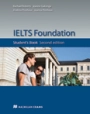
Let’s take an example from IELTS Foundation. A good place to start is always by getting students to underline the key words:

‘People will never be willing to make the dramatic lifestyle changes needed to control climate change. For this reason, governments must force people to do so.’

To what extent do you agree or disagree?

A good introduction should explain what they understand by the question, and might give a little background information. So identifying the key words will help with pulling out what the main idea is.

Then you could ask students to choose the best introduction from a selection. Here are the choices from IELTS Foundation:

1 I think that it is very important that we should all look after our planet. After all, it is the only one we have. There are lots of small actions that we can all take such as switching off computers and televisions, rather than leaving them on standby or walking short distances rather than going in the car.

2 Nowadays, most people are aware of the threat of climate change and are willing to make small changes to the way they live. However, for the majority of people this does not include such things as giving up their car or giving up flying abroad.

3 Governments must force people to make changes or the problem of climate change will never be solved. If necessary, people who continue to pollute the planet should be sent  to prison.

[The answer is 2, because it simply summarises the background situation, and students could then go on to discuss if and whether people should be forced to do these things]

Variations on this activity could include:

1 Giving a question and asking students to just write an introduction as a warmer or change of pace activity.

2 Asking students to compare these introductions in small groups and choose the best one, or make changes together to improve what they have written.

Most students seem to feel that the best way to prepare for IELTS writing is to write lots and lots of essays. However, very often there is no significant improvement from one essay to the next. Students also get very caught up in the accuracy of the language being used, when there are still some serious structural defects. Language is very important as well, and I think there’s another post in that, but getting the structure right can also make a huge difference.

9 Comments

Filed under IELTS, Writing

The Science of Smiling: free downloadable lesson

A free downloadable lesson about why smiling, even when we don’t feel much like it, can actually make us happier. The lesson starts with a short video, demonstrating the impact of smiling on the ‘miserable’ people of Edinburgh. After some brief discussion, the students go on to read a text about the various scientific findings about the emotional impact of smiling. The text and task would be suitable for students preparing for IELTS, especially at a lower level, but is suitable for a General English class as well. Finally, the lesson looks at a lexical set of idioms to describe emotions, and the students are asked to discuss how different situations might make them feel.

Download PDF here: ELT Resourceful – The Science of Smiling

30 Comments

Filed under Downloadable lesson materials, Exploiting authentic reading materials, IELTS, Listening, Speaking, Vocabulary

Taking a genre approach towards IELTS writing (Part 1)

Photo Credit: AlaskaTeacher via Compfight cc

Photo Credit: AlaskaTeacher via Compfight cc

In a previous post, I looked at how a genre approach could help students who need to produce a specific type of writing. IELTS is a perfect example of this, and in this post, and the next one, I want to look in more detail at ideas for helping students to become familiar with the genres required for the IELTS Writing Test.

At first, the IELTS Writing Test (whether as a teacher or student) can seem rather intimidating. Many people are not particularly familiar with the kinds of texts required, and students are penalised for not producing exactly the right kind of text.

However, as a teacher of General English we ask our students to produce many different genres. For example:

  • Thank you letter
  • Letter of complaint
  • Narrative
  • Description
  • Biography
  • Form filling
  • Short message
  • Email to a friend
  • Postcard
  • Letter of application
  • Instructions
  • Report
  • Summary
  • Poem
  • Anecdote
  • Magazine article
  • Newsletter
  • Essay

In contrast, IELTS requires much less:

Part 1: Describing data

  • Graphs and charts
  • Process
  • Map

Part 2: Essay

  • Argument
  • Balanced opinion
  • Problem-solution

In addition, although I have separated out the different kinds of tasks in each part of the Writing Test, they do in fact have a lot in common. Learning what the features are of these different genres is quite manageable and, while it won’t solve problems like not having an opinion on the topic in Part 2, it will go a long way towards helping students produce a decent answer.

The features of a particular genre can be grouped under the following headings:

Content or communicative purpose

Layout 

Organisation

Grammatical structures

Lexis/formulae

So, looking at the most typical IELTS Task, describing a graph, chart or table, we could say:

Communicative purpose

  • Summarise information  (not to give your opinion about it)

Layout

  • Should use paragraphs
  • About 150 words

Organisation

  • Introduction which rewords the rubric to summarise what is shown.
  • Clear overview
  • Identifying key features- not every little detail
  • Logical grouping of information

Grammatical structures

  • Comparing and contrasting
  • Describing changes over time

Lexis/formulae

  • Rise, fall, plummet etc.

Once you’ve identified the key features, you can start to devise activities to work on each of them.

Rewording the rubric

This comes under organisation, so we aren’t starting at the top,  but it is the first thing the student needs to be able to do.  Students who ‘lift’ phrases from the rubric will be penalised, so it needs to become second nature to paraphrase.

You can start by doing this together on the board, eliciting different words and phrases for the underlined sections. For example:

‘The table below gives information about changes in modes of travel in England between 1985 and 2000

Don’t forget that you can change the sentence structure too, so ‘changes’ could become ‘how…have changed’. This is particularly useful if students can’t think of a synonym. Once students have got the idea, and a few useful phrases up their sleeves, this can become a regular warmer, with a competition to see how many appropriate paraphrases they can produce in a time limit. E.g.

The table illustrates how methods of transport in England changed between 1985 and 2000.

In this table we can see the changes in how people in England travelled between the years 1985 and 2000.

This table shows changes in modes of transport in England over a 15 year period, from 1985- 2000.

Summarising information/identifying key features

This is probably the biggest challenge of Part 1, and it takes lots of practice.  Depending on their educational background, students may not be very used to interpreting graphs and charts, so you need to try and familiarise them with how they work. A good way to do this is to start off by getting students to make their own, based on information about themselves or the class. In this way they will really understand the data, making it easier for them to identify the most important features.

Next, you could try giving students model answers without the graph or table, and ask them to draw it based on the answer. They can then compare it with the original.

There is usually some kind of contrast in these types of questions-e.g. some sales fell while others grew, so train your students to look for similarities and differences, and any particularly striking contrasts.

One way to practise this is to take a kind of jigsaw approach. Divide students into pairs and ask A to look for similarities between the pieces of data and B to look for differences. They can then share information and decide together on the most relevant pieces of information to include.

Giving a clear overview

This is related to identifying key information, but requires students to summarise the main point(s). It is really important that they are able to do this, though it doesn’t really matter if they give the overview at the beginning, as part of the introduction, or at the end, as a conclusion.

Show students a chart of graph with three possible overviews and ask them to decide which one is best, and why. As they become more familiar with this task, they can write their own choice of three and swap with other students to decide on the best overviews.

Using paragraphs/logical grouping

Once students have identified the key features, they need to decide how to group them.  There are different ways of doing this, depending on the information. For example, they might choose to organise it from smallest to biggest (though still not describing every little detail), or first look at similarities and then differences.

Again, model answers can be very helpful. Try asking students to decide how they would organise their answer to a question, and then compare their ideas with the model answer.

Language focus

Students are very often asked to compare and contrast in these tasks, so a good grasp of the kind of language they need to do this is really helpful. ( Incidentally, it’s also really useful for the other IELTS tests, especially Speaking) This can be achieved through work on formulae (e.g. In contrast, we can see that..) , comparative and superlative structures and linkers such as whereas, while, however.

They might also be used to describe changes over time, which also involves comparing and contrasting, but will need more complex use of tenses (not just present simple).

An excellent resource for typical language can be found on Alex Case’s website

Try using model answers for students to find examples of comparing and contrasting (or any other suitable language focus). Then ask them to look back at a Part 1 task they have written and ask them to improve it by adding similar language.

Essentially, this approach involves breaking down the component parts of the IELTS genres and practising them separately, rather than simply writing practice paper after practice paper. Of course, you can then put it all together and do some practice papers as well.

In my next post, I’ll look at some more ideas for developing familiarity with the features of Part 2 type writing tasks.

21 Comments

Filed under IELTS, Writing

The Icing on the Cake- free downloadable lesson

A free downloadable lesson based around another wonderful animated true story from http://www.storycorps.com. The conversation between a mother and daughter looks back on the family’s struggles as poor immigrants to the US, and how the daughter was inspired by her mother’s determination.

The lesson is  suitable from Pre-Intermediate +/A2+, particularly because the animation helps with comprehension. After watching and listening, there is a focus on impersonal pronouns/adverbs (something, anything, everyone.nowhere etc) and a discussion task which brings in more vocabulary to describe qualities we’d like to pass onto our children. Again, this could be adapted to lower and higher levels through the choice of vocabulary.

Download PDF here: ELT Resourceful – The Icing on the Cake

6 Comments

Filed under Differentiation, Downloadable lesson materials, Exploiting authentic recordings and videos, Grammar, Listening, Speaking, Vocabulary

The chicken nugget experiment- a free downloadable lesson

A free downloadable lesson based around a video of British chef, Jamie Oliver, demonstrating exactly what does go into cheap chicken nuggets to a group of American children. It’s pretty revolting, but the children reckon it’s ‘awesome’..and there’s a surprise at the end.

The lesson is at two levels, Lower Intermediate (A2+) and  Upper Intermediate (B2+). Both versions introduce a set of vocabulary for talking about junk food, and both have a variety of discussion tasks and questions. The lower level version also introduces some functional language for giving opinions and agreeing and disagreeing, while the higher level version looks at how to use contrast markers, although, even though, despite etc.

Download PDF here: ELT Resourceful-The Chicken Nugget Experiment-LowerInt

Download PDF here: ELT Resourceful-The Chicken Nugget Experiment-UpperInt

7 Comments

Filed under Downloadable lesson materials, Exploiting authentic recordings and videos, Grammar, Speaking, Vocabulary