Category Archives: Speaking

The chicken nugget experiment- a free downloadable lesson

A free downloadable lesson based around a video of British chef, Jamie Oliver, demonstrating exactly what does go into cheap chicken nuggets to a group of American children. It’s pretty revolting, but the children reckon it’s ‘awesome’..and there’s a surprise at the end.

The lesson is at two levels, Lower Intermediate (A2+) and  Upper Intermediate (B2+). Both versions introduce a set of vocabulary for talking about junk food, and both have a variety of discussion tasks and questions. The lower level version also introduces some functional language for giving opinions and agreeing and disagreeing, while the higher level version looks at how to use contrast markers, although, even though, despite etc.

Download PDF here: ELT Resourceful-The Chicken Nugget Experiment-LowerInt

Download PDF here: ELT Resourceful-The Chicken Nugget Experiment-UpperInt

7 Comments

Filed under Downloadable lesson materials, Exploiting authentic recordings and videos, Grammar, Speaking, Vocabulary

Living without money: free downloadable lesson

A free downloadable lesson about Heidemarie Schwermer, who lives without using money. Suitable from Upper Intermediate (B2) upwards, the lesson uses an authentic newspaper article, and focuses on reading, vocabulary and discussion. Note that the video below, which is in German, with English subtitles, is a lead-in, with the main focus on the authentic reading text to follow.

Click here for the PDF : ELT Resourceful-Living without Money

After the lead-in, students work on vocabulary from the authentic text, related to money and different roles in life. They then look in detail at the reading text before being invited to consider their opinions about Heidemarie’s lifestyle, and the bigger question of whether society is too materialistic and whether (and how) it should change.

6 Comments

Filed under Downloadable lesson materials, Exploiting authentic reading materials, Exploiting authentic recordings and videos, Speaking, Vocabulary

Pay it forward: free downloadable lesson

A new free downloadable lesson about the concept of ‘pay it forward’, incorporating reading, speaking, video, grammar and writing.

ELT Resourceful – Pay it Forward-Pre-Int level

ELT Resourceful – Pay it Forward-Intermediate

ELT Resourceful – Pay it Forward-Upper Int level

This lesson starts with a short reading text about a recent event at a coffee shop in Canada, where some-one’s kindness in paying for the person behind them led to 288 people passing on the favour to the next in line. The lesson then uses the video above (no words, just music) to extend the idea, before focusing on defining relative clauses. There are three different versions, so that you can either choose the most appropriate for your students, or use all  three with mixed level classes. The lesson rounds off by asking students to complete a story, imagining their own chain of events.

23 Comments

Filed under Downloadable lesson materials, Exploiting authentic recordings and videos, Grammar, Speaking

Task repetition: helping students to improve accuracy,repertoire and fluency

I am very far from being a fluent Polish speaker. In fact, after four years of hard study and living in the country, I was still probably only about B2 level. However, if you happened to hear me chatting to a taxi driver in Polish, you’d probably conclude I was pretty fluent.

I was very good indeed at the basic chitchat of where are you from, how long have you been in Poland, what do you think about Poland and so on. And the reason I became so fluent (in this context)? ….I caught a lot of taxis.

In other words, I had plenty of opportunity for task repetition. In language learning terms, task repetition is a term most often related to task-based learning. Perhaps one of the key articles about this is Martin Bygate’s Effects of task repetition: appraising the developing language of learners. In this article, Bygate suggests several benefits to getting learners to repeat a task:

  •  More fluency in terms of pausing and speed (less need to plan as we speak)
  • Fewer false starts and self corrections
  • Fewer errors

These reasons seem fairly self-evident, and you could say exactly the same things about drilling a dialogue. However, while I also think there are benefits in simply repeating or drilling, task repetition is about more than this. Bygate suggests that once the speaker is more familiar with the content, this frees them up to not simply make fewer errors or speak more quickly, but to actually pay more attention to how they formulate their meaning.

In this article, Bygate demonstrated (admittedly with a small sample), that repeating a simple speaking task (in this case describing a film), without any input or feedback, still led to the learner producing more appropriate and more complex language. They improved in terms of accuracy, repertoire and fluency.

Since then, further research has confirmed that task repetition does indeed have a positive effect on complexity and fluency, though some feel that learners may also need feedback on the first task (instinctively, I would tend to agree with this).

So, how can we start to build in more task repetition without boring students? The first thing to say, perhaps, is that I think the idea that repeating a task is boring, may well be a projection from the teacher. If a student is really engaged in a task, and struggling (in a good way) with getting meaning across, it won’t be boring, but satisfying. See this article  for a piece of research which set out to prove this.

In repeating speaking activities, I would suggest:

–      Play about with giving feedback in between repetitions. Sometimes you could give immediate feedback, with examples you have noted while monitoring. Sometimes you could make notes then use these notes to plan a short teaching session in another lesson, before a task is repeated. Sometimes the feedback could be self-evaluation (especially if students are able to record themselves) or peer feedback.

–      Try repeating the task at different time intervals (immediately, next lesson, next week, next month) and see what difference it makes. Again, recording both versions can be very helpful so that students themselves can be helped to notice improvements.

–      Change the audience for the task. This could just be telling the story again to a new partner (which makes it more genuinely communicative), or it could be moving from 1-2-1 to speaking to a larger group, or from speaking to a live group to recording the talk (using Vocaroo or just a mobile phone).

–      Change the task slightly. Choose a new task which has enough parallels in terms of structure and likely language for students to benefit from repetition, but enough difference to keep up the interest. For example, asking students to retell a narrative from the point of view of a different person involved in the story (same events, different perspective)

And, of course, task repetition does not always have to be about speaking. All the above points could equally well apply to writing. We have more time available to process when writing, so combining writing and speaking can work very well too. First students tell and then they write- or vice versa.

And it can even apply to receptive skills work. See this post, for example, on repeated reading.

Please feel free to add other task repetition ideas- I’m sure the possibilities are endless.


20 Comments

Filed under Different ways to use a coursebook, Speaking, Teaching methodology, Vocabulary

Helping students with connected speech

There is a huge difference between what our students see printed on a page and what we actually say in everyday speech.

In a recording of a TESOL Spain Presentation on Youtube (well worth watching), Mark Hancock makes the following joke:

Patient: Doctor, Doctor, I’ve got two theik, a near rake, sore rise, bruise darms a stummer cake and I far tall the time.

Doctor: I see, perhaps you’d like to way tin the corridor?

(Try reading it aloud)

The joke [apologies for the vulgarity 😉 ] showcases a good number of examples of features of connected speech. Teacher can tend to shy away from highlighting these in the classroom, but research shows that teaching learners about connected speech can really make a difference in terms of how well they understand native speakers. See for example, Authentic Communication: whyzit important ta teach reduced forms (Brown 2006) . Equally, some ability to use these features in their own speech will also be likely to make students more confident and fluent speakers.

Features of connected speech

As a brief overview, there is a strong tendency in English to simplify and link words together in the stream of speech, in order to help the language flow rhythmically. Some of the most common features:

Assimilation

This is when the sound at the end of one word changes to make it easier to say the next word. For example:

‘ten boys’ sounds like ‘ tem boys’ (the /n/ sound changes to the bilabial /m/ to make it easier to transition to the also bilabial /b/)

Incidentally bilabial just means two lips together, which is a good example of the kind of jargon that puts people off!

Catenation

This is when the last consonant of the first word is joined to the first vowel of the next word. This is very very common in English, and can be very confusing for students. For example:

‘an apple’ sounds like ‘a napple’ (Teacher, what is a napple?)

Elision

Elision means that you lose a sound in the middle of a consonant cluster, sometimes from the middle of a word. E.g. ‘sandwich’ becomes ‘sanwich’.

Or from the end of a word. For example:

‘fish and chips’ ‘fishnchips’

Intrusion

This is when an extra sound ‘intrudes’. There are three sounds that often do this /r/ /j/ and /w/

E.g. ‘go on’ sounds like ‘gowon’

I agree sounds like ‘aiyagree’

Law and order sounds like ‘lawrunorder’

[I probably should have used a phonemic keyboard!]

If you want to discover more about features of connected speech- and I think it’s fascinating stuff, there’s a list of useful books at the end of the post, but now let’s look at some activities to help raise awareness and encourage more natural sounding speech.

Connected speech activities

I remember reading somewhere that there are three ways to deal with pronunciation in the classroom: integrating it into other activities, dealing with it discretely, and completely ignoring it. 😉 Let’s assume we aren’t going to do the latter, and look at the other two approaches.

Integrated activities

I strongly believe that students should be made aware of the basics of connected speech right from the start. I don’t mean that you should be teaching your beginners exactly what catenation is, but you can certainly show them how words link together and what happens to sounds in the stream of speech. You don’t have to be an expert, and you don’t even need to know very much about the technical aspects; you just need to listen to yourself very carefully and notice what is happening in your mouth as you speak.

Drilling and using the board

At lower levels, we tend to teach quite a lot of functional chunks, such as ‘What’s your name?’ Phonetically that could be transcribed as /wɔ:tsjəneɪm/. However, this is likely to confuse (terrify) the students. Instead, using the board, you can just show the students how the words link by using arrows, and write the schwa /ə/over the top of ‘your’ . Alternatively, you can use your fingers to show how the three words (separate fingers) meld into one long sound (push fingers together). And model and drill the phrase as it is said naturally.

If students struggle with longer phrases, try the technique of back-chaining, starting from the last sound and working up to the whole sound bit by bit. For example with ‘Where do you come from?’ you drill ‘frum’ ‘kumfrum’ ‘dz-kumfrum’ ‘where-dz-kumfrum’ I have no idea why this works- but it does.

Using recording scripts

Where new language has been recorded (or by recording it yourself), ask students to first look at the chunk of language written down and try saying it a few times. Then play the recording several times and ask them to write down what they hear, however they want to spell it. Use the two written forms to elicit the differences (such as the use of the schwa) and then drill the more natural pronunciation. You could of course just say the phrase for them, but it can be hard to keep repeating something exactly the same way.

Make it part of presenting new language

Whenever you are dealing with new language, you need to be thinking about the meaning, the form AND the pronunciation. So if you’re teaching ‘Have you ever + past participle’, make sure you’re teaching it as something like /əvju:w’evə/ not ‘Have… you… ever…’ You don’t need to explain that the first /h/ is elided or that there’s an intrusive /w/- just provide a good model.

Incidentally, I say ‘something like’ because individual ways of connecting and simplifying speech do vary a bit.

Be aware of the difficulties connected speech may cause with listening

If students struggle to understand something in a recording, or that you say, be aware that they may actually know all the words, just not recognise them in the stream of speech. A great example of this is the student who asked me what ‘festival’ meant. I went into an explanation, giving examples of different festivals…but teacher, he said, why do you always say it at the beginning of the lesson? (I was saying First of all…).

If students don’t understand a phrase, see if they do understand it written down and then take the opportunity to highlight the differences between the written and spoken forms.

Discrete activities

As well as teaching connected speech as you go along, it is also worth doing some discrete activities for the purpose of awareness-raising.

  • A good activity to start learners thinking about connected speech and weak forms is to dictate just part of some phrases. For example: ‘uvbin’. After students have written these down as best they can (this should be a light-hearted activity), you dictate the full phrase, in this case ‘I’ve been to Paris.’.
  • After doing a listening activity, try doing a dictation where you handout the recording script, with chunks of 2-3 words missing. These should include some aspects of connected speech. Students have to complete the gaps, which will help to develop their decoding skills.
  • Mark Hancock has some great activities in Pronunciation Games and on the HancockMacDonald website. I particularly like The Word Blender, a game for A2/B1 students which starts to help students identify some of the features of connected speech.

This is necessarily a very brief and somewhat simplistic overview. For more information and ideas, you could try:

Reading

Sound Foundations- Adrian Underhill- Macmillan

Pronunciation- Dalton and Seidlhofer- OUP

Pronunciation Games- Mark Hancock-CUP

Sharon Noseley-Kallandzhs’ DELTA Phonology_Assignment_and_Lesson_Plan

Sharon Noseley-Kallandzhs’ powerpoint on features of connected speech

If you are currently taking CELTA, can I suggest my e-book, The CELTA Teaching Compendium, available from Amazon and Smashwords, containing everything you need to know for CELTA teaching practice.

celta compendium cover

46 Comments

Filed under Pronunciation, Speaking

How to activate the ‘Useful Language’ box in your coursebook.

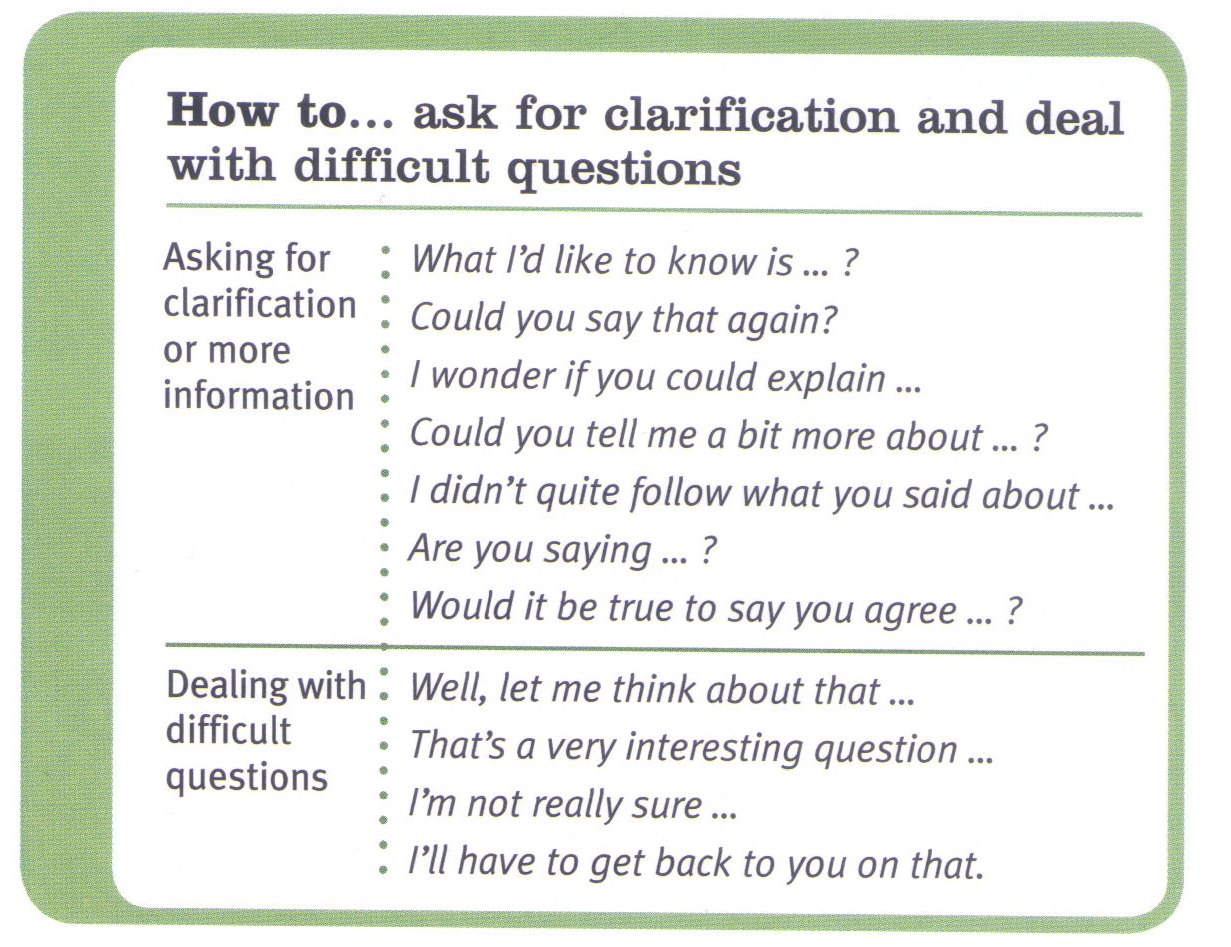
From New Total English Intermediate- Pearson 2011

A common feature in many coursebooks is the ‘Useful Language’ box. This is usually a collection of phrases which the authors consider may be useful for an upcoming speaking activity. A ‘useful language’ box is potentially a great idea because the tendency in speaking activities can be for students to simply stay safe and just use what they already know. Providing this language gives us the opportunity to scaffold their learning and encourage the learners to stretch themselves a bit.

However, in practice, there are two recurring problems.

  1. What do you actually do with the Useful Language box? Just getting students to read through it certainly isn’t enough to get them using the language.
  2. There seems for many students to be a reluctance or inability to use the language straightaway (see this recent conversation on Pearson ELT Community). And if they don’t use it straightaway, what are the chances of them locating and using it at a later date?

I think most people would agree that for students to use new language:

– They need to process the language in some way, work with it, not just be shown it.

– They need to know exactly how to use it in and in what context.

– They need to need to use it.

A good place to start with ‘useful language’ is by having it come out of a recording, rather than just being on the page. With the example above, from New Total English Intermediate, students have been listening to a short presentation, with follow up questions, and, after carrying out other comprehension based tasks, they listen again and tick the phrases they hear being used. They then prepare and give their own mini-presentations.

This approach works in terms of providing context, and it also means that there is a model for pronunciation, which is often very important with functional language (more later). However, there is still, I feel, something missing between identifying the phrases and being expected to use them.

Contextualisation

If the ‘useful language’ came from a recording, students will already have some idea of how they can be used in context. If not, you will, I think, need to provide some. Live listening can be good way of doing this (see my previous post for details). Essentially, you provide the model, ideally recording yourself so that it can be replayed. With the example of useful language given here, you might ask a confident student to give a short presentation on a very familiar and unthreatening topic and warn them that you will ask lots of questions! You can then play the recording back and start to work with the language, as discussed below.

Other ideas for processing the language

Categorisation

Exactly how you do this obviously depends on the language, but, for example, with the language box above, you could ask students to divide the first section into phrases to use when you don’t understand, and phrases to use when you want more information. If the categories aren’t clear-cut, so much the better as this will force students to discuss why they have chosen to put a phrase in that category- and thus create more processing.

Phrase completion

Useful language boxes often have phrases with elllipses (…….), so that students can complete them however they choose. Fine, if they have the faintest idea how to complete them! So, one task could be to give them a context, and ask them to write a completion for each phrase. For example, with this useful language box, you could give a short talk yourself, or use the recording, or use a short video and ask students to prepare questions using the stems. This will also help you to see whether they are able to use them grammatically. As an example, I think many students might struggle with completing ‘What I’d like to know is…’ because of the emphatic structure used.

Dictation

Rather than showing them the useful language box, try closing the book and dictating the phrases. You could add some challenge by mixing up the phrases and asking them to decide where in the box they belong (in this example, in ‘Asking for clarification or more information, or in dealing with difficult questions)

You should make sure that you dictate the phrases in a natural way, as complete phrases, with appropriate intonation, and normal features of connected speech. This will then have the added bonuses of providing a further model of how to say the phrase, and raising awareness of connected speech. For example, some students may well write down ‘What I like to know is..’, rather than ‘What I’d like to know is..’, giving the opportunity to focus on the ’ ‘d’ they didn’t hear.

Writing dialogues

You may have noticed that the activities so far are more focused on writing than speaking, which may seem odd when these phrases are provided for a speaking activity. However, writing can be a good way of bridging the gap between new language and speaking. In ‘How to teach Speaking’, Scott Thornbury points out, ‘Inevitably, because of the constraints placed on mental processing by the demands of real-time speaking, learners tend to rely on a very narrow repertoire of memorized expressions in face-to-face interaction…it may sometimes help to reduce the processing demands on them..one way of slowing down processing is to turn the speaking task into a writing one.’

The following two ideas both come from this book:

–          Paper conversations. Learners have a conversation, but, instead of speaking, they write the conversation on paper. The teacher can then easily monitor and make suggestions for improvement.

–          Rewriting. Students can be given a simple dialogue and asked to rewrite or modify it to use the new language.

Work on pronunciation

As mentioned above, pronunciation is particularly important in using functional-type phrases. They need to be delivered fluently, as a chunk, or they are likely to sound a bit odd and artificial. Intonation is also often extremely important. Think about the phrase, ‘Are you saying…?’  This needs to be delivered with the right intonation, or it could sound pretty aggressive!

So students need a good model- either a recording, or the teacher- and they need to practise drilling the phrases, getting their tongues round the connected speech and using the right intonation.

A fun way of working on intonation is to ‘say’ the phrases using just ‘Mmmm, mmmm’. Students have to guess which phrase you are saying. As they become more confident, they can do this themselves in pairs.

Using the ‘useful language’ in a speaking activity

After time spent processing and preparing, students should be much more likely to use the language in a follow-up speaking activity anyway. However, there are a few ways to encourage this further.

– As described by Antonia Clare in the Pearson ELT discussion I mentioned earlier, you can write phrases on cards and hand out a few to each student. They need to try to put ‘their’ phrases into the conversation as naturally as possible. If the other students feel it wasn’t natural, they could have to take the card back.

– A certain amount of pressure, such as recording the conversation or giving a presentation to the class can encourage students to focus more on using the new language.

– Similarly having an observer in the group, whose job it is to notice when people use the ‘useful language’ can help to focus the mind.

– Depending on the language and the teaching context, students can be asked to go away and ‘notice’ any of the phrases being used in conversation over the next week (on TV, eavesdropping at the bus-stop etc).

10 Comments

Filed under Different ways to use a coursebook, Speaking, Vocabulary

Developing complexity through a focus on form

In a recent IELTS exam, I had to assess someone who lived locally, with a British passport. I’m not sure if she could have been called a native speaker, but I’m pretty sure that most people meeting her would have made that assumption. She had a local accent, and her language was pretty fluent. It was also mostly accurate. However, what was missing was complexity.

There was a lot of repetition, using the same simple phrases again and again. She tended to use mostly present tenses and simple linkers, such as and, but and because. Overall there was a tendency to avoid more complex sentence structures. She produced language confidently and with ease, didn’t make many mistakes, but still couldn’t be said, I thought, to be producing a ‘full range of structures’ or to be using vocabulary ‘with full flexibility and precision ’.

If we focus solely on achieving communication, some students will stay stuck at a certain level of complexity. Therefore we also need to provide opportunities for students to focus on form.

In his article, Accuracy, fluency and complexity (2000), Scott Thornbury looks at the traditional PPP (presentation-practice-production) model and makes the point that complexity was supposed to be targeted in the first presentation stage. Students have their attention drawn to a particular language point, and then get the opportunity to use it.

Thornbury says that there is ‘a growing belief that restructuring is more likely to occur during practice activities.’ Instinctively, this feels right to me. I think those ‘aha’ moments definitely tend to occur more when students are actually doing something with the language. However, I also like the way that Jack C Richards puts it in Moving Beyond the Plateau:

‘For learners’ linguistic systems to take on new and more complex linguistic items, the restructuring, or reorganization, of mental representations is required, as well as opportunities to practice these new forms (the output hypothesis). Ways of increasing the opportunities for restructuring to take place can occur at three different stages during an activity: prior to the activity, during the activity, or after completing an activity.’

 So, what can we do at each of these stages to help learners restructure and complexify language?

 Prior to the activity

While I think that students have to be interacting with language in some way in order to restructure, I don’t think that they necessarily always have to be using it themselves. What about:

Concept checking

Sometimes seen as a weird and unnecessary hoop that trainers make you jump through on the CELTA, to be abandoned as soon as possible afterwards, concept checking can actually often be a source of those ‘aha’ moments.

A concept question tries to pin down the main concept behind a piece of language and check it. So, for example, ‘used to’. The dictionary definition (Macmillan Advanced) is ‘Used for saying what was true or what happened regularly in the past, especially when you want to emphasize that this is not true or does not happen now.’ So, the concept questions  for ‘I used to enjoy gardening’ could be..

–          Did you enjoy gardening once or regularly?- regularly

–          Do you still enjoy gardening now? – No

[Traditionally they are used in the first part of a PPP lesson, but you can, of course, use concept questions at any stage of the lesson, not just the beginning]

Giving a model

Before students carry out a speaking task, it can be helpful for them to listen to more competent speakers (whether you or a recording) carrying out the same or a similar task. You can then draw attention to some useful language they can add to their store. You could ask them to listen and pick out specific items, or they could choose for themselves. There are plenty of ways of getting students to ‘notice’ language (see this post on noticing in reading )

Planning time

Research shows that planning time will tend to increase the complexity of language used. It may give students time to dredge up language that they do know, but that isn’t yet in their easy to reach store of language. Or they may learn from each other in the planning process, or you can feed in language they could use.

During an activity

Some years ago I was teaching a class in Brazil, using Headway Upper Intermediate. There was an article about holiday disasters, which included a story about an overbooked flight. According to the story, passengers had had to run around the plane and the first ones to get round got the seats. I decided to set up a role-play around an overbooked flight. The idea was for students to come up with a good story as to why they had to get a seat, and persuade the cabin crew. Instead, the students set up a bank of chairs and started running!

The point being, if achieving the task becomes too important, language will fly out of the window (especially with teenagers).

We need to find a balance between base-line communicating (with whatever means possible) and being too focused on form, so that we are not genuinely communicating at all.

Performance

Introducing an element of performance can help with this. If students know that they will have to make a short presentation on their discussion, for example, this can help to focus them more on the actual language they are using. Similarly, recording the discussion for later review, can also help to keep some focus on form, without taking away the genuine need to communicate.

Repetition

We also know that repeating a task usually results in a higher level of complexity, as students become more confident with the material. Obviously we need to find ways of providing an opportunity to repeat the task in a way which makes some communicative sense- e.g. having a different audience the second time.

After an activity

This can be the very best time to focus on form, as it means that the task can’t have been compromised by too much emphasis on the language used.

Using a model

Instead of listening to a model before carrying out a task, students could listen to a model after they have done the task and notice any language that was similar to what they used, or that they could have used but didn’t. This can be particularly motivating as an interim stage before students are asked to repeat the task.

Self-noticing and reformulation

If the speech has been recorded, students can be asked to transcribe a short section of their speech (1-2 minutes). They can make any changes they wish before handing it in to the teacher. This in itself will be a valuable awareness-raising activity.

Step two, however, is for the teacher to then reformulate what each student has written, as appropriate. The student can then compare their version with the teachers’ version, providing another noticing opportunity.

If you have a large class, you could do this with 1 or 2 anonymous examples (different people each time), and look at them with the whole class.

Consciousness-raising tasks

If students are all tending to make the same kind of errors (such as problems with articles), you could note down a range of examples and give them to the students to both correct and agree on the rules.

Traditional practice activities

In the PPP model, these come before ‘production’, but there is no reason why these can’t come at the end of the lesson, after the speaking, as a way of helping to consolidate language which may or may not have been used during the speaking task.

Feedback

You can, of course, note down errors and examples of good language (to develop complexity, not just accuracy) while the task is taking place and carry out a feedback slot at the end of the class where you put these on the board and elicit corrections.

Alternatively, you could develop some peer feedback tools. Someone in the group can take the role of listening and making notes, or you could record the discussions (quite easy in these days of mobile phones). Students can then look for examples of particular language forms or particular speech acts (such as ways of encouraging others to continue). Because this is potentially quite exposing for group members, it is generally better to focus on finding good examples, rather than finding mistakes.

I strongly believe that if all we do is provide learners with opportunities to communicate, we are doing them a disservice. Our job has to be to help them to communicate more effectively, which, I would argue, involves a focus on form, at whatever stage(s) of the lesson that might be.


5 Comments

Filed under IELTS, Speaking, Teaching methodology

How identifying the different roles we play can help groups work better together

Who are you?

This may seem an obvious question, but now try getting a pencil and writing down ten different responses to that question before you read on….

…If you look at your list, you might have listed your gender or ethnicity, and there may be some adjectives such as kind or artistic. You’re likely to see a set of roles that you play: teacher, manager, parent, son or daughter.

We all play different roles in different groups, and the classroom is no exception.

You are likely to take on different roles within your role of being a teacher: facilitator, critic, guide… But what about the roles your students take within the group?

Group theory (see, for example, Communicating in small groups: Beebe and Masterson) divides roles into three different types:

Task roles: roles that help a group carry out a task

Some examples

Initiator- contributor: proposes new or different ideas or approaches

Information seeker: asks for facts or clarification

Opinion seeker: Asks for values and opinions

Elaborator: provides examples

Orienter: attempts to summarise and keeps the group focused on the task

Maintenance roles: roles that help the group work smoothly together

Some examples

Encourager: Offers praise and acceptance

Harmoniser: mediates disagreements

Compromiser: attempts to resolve conflicts

Individual roles: these tend to be counter-productive to the group as a whole

Some examples

Aggressor: puts other people down

Blocker: negative, stubborn and difficult

Dominator: tries to take over the group

It is tempting to use these roles to start labelling your favourite (or least favourite students), but in fact, roles change all the time, and people can play many different roles. The point of exploring different roles is not to stereotype people or make them feel they should be carrying out a particular role, but to help the members of a group or class be aware of how they are all working together, and how that interaction could be improved.

Activities to raise awareness of group roles

The first two ideas are both ways for students to track interaction within a small group. This can be very useful for getting an overview of how the group is working.

  1. Put the students into groups of five or six. One person observes while the others carry out a speaking task. The observer draws circles on a piece of paper to represent each member of the group. They then listen and draw arrows each time someone speaks.  If one person speaks directly to another, draw an arrow between them. If someone speaks to the group as a whole draw an arrow away from the group. If someone is speaking for more than a few sentences at a time more than one arrow can be drawn.

At the end of the task, the observer should feedback to the group on what they observed, and the whole group can discuss the findings:

–          What do you notice about the lines of communication?

–          Were the lines of communication an effective way of carrying out the task? Why/why not?

–          Was everyone happy with the way they participated?

–          What things could the group change in the future?

This task is taken from Conversation: Nolasco and Arthur.

2 A similar, but perhaps more entertaining idea, comes from Classroom Dynamics: Jill Hadfield. Rather than having an observer, the group has a ball of wool or string. The person starting the speaking task holds the end, and then passes the ball to the next person to speak. This continues until the task has finished (I’d suggest quite a short task!). The pattern of interaction will be very clear at the end, demonstrated by the web of wool or string. Or possibly the students will actually start to change the pattern of interaction as they see that they are either taking over a bit too much, or not contributing very much.

After this kind of activity, you could go a step further and actually start to look at the different kind of roles students are taking. This needs to be done carefully though, to avoid singling people out for criticism.

Jill Hadfield suggests two activities which could both be handled sensitively:

1 Using a self-evaluation questionnaire. There is a photocopiable one in Classroom Dynamics, which includes questions such as:

–          Did you contribute any ideas?

–          Did you encourage anyone else to contribute any ideas?

–          Is there any way you could help the discussion to go better….by making a suggestion etc.

She suggests carrying out a speaking task, then asking students to complete the questionnaire individually and privately, then carrying out a second speaking task and finally discussing if and how the second speaking task was an improvement on the first one. (From personal experience I can tell you that this process can be completely transformational.)

2 Observing group roles. In this activity, students carry out a speaking task and are observed. The observer ticks how many times various things (such as contributing an idea, interrupting, evaluating someone else’s idea, not talking in English) happen- but does not note down who did these things.  The group then looks at the results and decides which things are happening too often, and which not often enough. There isn’t necessarily a value judgement to these things. Contributing ideas is something we want to see happen, but if that’s ALL that’s happening, the group will not be working very smoothly! They then choose three things they should do more often and three things they should do less often.

Incidentally, although the observer in these tasks is not taking part, this can be a useful role for certain students. Students who tend to be very dominant can benefit from having to sit back and listen, and students who struggle to get a word in can benefit from having a clear role and being asked to feedback on what they observed.

6 Comments

Filed under Differentiation, Speaking, Teaching methodology, Working with groups

Using a teacherless task to develop student interaction

The first teacherless task I ever came across was in the first edition of Headway Upper Intermediate. Students were given the scenario of a murder mystery and each given a card with a different piece of information. They had to work together to solve the mystery, without any teacher intervention, obviously using only English.

The activity always went brilliantly and produced a lot of language. It was, of course, a task-based lesson, devised before TBL became a mainstream idea. Later, thanks to Simon Marshall, a long time colleague and friend of Mario Rinvolucri, I discovered that the teacherless task was something Mario was writing about in the late seventies. So, once again, there’s no such thing as a new idea.

What defines a teacherless task, however, is that it is always a problem-solving exercise where the students have to work together in order to solve it.

In Teacherless Tasks (sadly out of print), Rinvolucri specifies three different types of these tasks:

–          The students are given a logic puzzle in which the sentences describing the situation are divided up between them. They need to memorise their piece of information, then put the information together in order to solve the puzzle.

–          The students are each given a sentence from more than one short anecdote. They need to memorise their sentence then find the others who have the same anecdote as them before finally putting the sentences in order. They then need to prepare to tell the story fluently before being put into new pairs or small groups to share their stories.

–          The class is split in two. One half has the scenario of a typical lateral thinking logic puzzle. For example, Romeo and Juliet are found dead on the floor, amidst a small puddle of water and some broken glass. What happened?  The other half of the class has a clue each. For example, Romeo and Juliet are quite small. The questioners ask those with clues any questions they like and anyone whose clue helps can answer the question. (Incidentally, if you don’t know this puzzle, the answer is that Romeo and Juliet are goldfish and the cat knocked over their bowl)

I included a teacherless task like this in Premium B1, together with an exercise on ‘managing’ a conversation. See below if you want to try it out. There are j-pegs from the Students’ Book and Teachers’ Book.

The teacherless task can really help to develop interaction between the students in the following ways:

–          Each person only has a small part of the information, so everyone has to work together to solve the problem.

–          Every piece of information is essential, so everyone has to join in.

–          Fitting the information together is a complex process, so the students have to listen to each other much more carefully than they might usually do.

–          If students cannot understand each other they are forced to ask for clarification rather than relying on the teacher to ‘interpret’.

–          It is highly motivating, providing a genuine reason to communicate.

–          You often find that students who have previously been quiet come to the fore, as this task requires different skills, such as logical thinking.

–          Solving the puzzle brings a sense of achievement and encourages greater group cohesion- it’s a kind of team building exercise!

The focus is primarily on communication. However, you can start by looking at the kind of interactional language they might need, as in the example from Premium above. You can also note down any errors and carry out some feedback at the end- making sure that you do focus on their achievements as well.

8 Comments

Filed under Speaking, Teaching methodology

Using live listening to prepare for IELTS speaking

The extended monologue

In the second part of the IELTS test, candidates have to speak for 1-2 minutes on a given topic, having been given 1 minute to prepare. (Incidentally, I have mentioned IELTS in the title, because this is perhaps the best known example, but there are other speaking exams (e.g. Cambridge ESOL Skills for Life L1 and L2 ) where candidates have to carry out similar tasks).

Although Part 2 of IELTS is not actually as tough as Part 3, for many candidates, it is the part they dread the most. However, it is also the part where familiarity with the task and plenty of practice can really make a huge difference. As an IELTS examiner, I sometimes examine native speakers applying to emigrate to Australia, and even these perfectly fluent speakers can struggle with Part 2 if unprepared.

In IELTS the candidate is given a number of points to cover. For example:

Describe a leisure activity which you enjoy doing.

You should say:

–          What the activity is and how you do it

–          When and how often you do it

–          What equipment you need

And explain why you enjoy it.

[example from IELTS Foundation Second Edition]

In order to do well in this part of the exam, students need to:

1 Structure their answer well, so that it is coherent and cohesive.

2 Speak fluently, without too many hesitations.

3 Demonstrate accuracy and range in their language.

Live listening is an excellent technique for both modelling the kind of answer the students should be aiming for, and providing a source for language they can use.

What is live listening?

In a nutshell, live listening means listening to the teacher (or another visitor), in a face to face situation, rather than using a pre-prepared recording. The teacher can be a neglected resource in terms of listening, as teachers try to avoid the dreaded ‘teacher talking time’. However, there is a world of difference between the teacher mumbling away to the class instead of giving clear and concise instructions, and using the teacher as a rich resource for listening.

Listening to the teacher speaking at length offers the benefits of:

–          genuine, real-time communication.

–          all the features of natural spoken English (hesitations, false starts, connected speech etc)

–          facial expressions and gestures

–          the opportunity to offer clarifications

Using live listening to prepare for IELTS Part 2

Using set of prompts like those above, the teacher prepares to talk for 1-2 minutes on the topic. You might want to spend more than the 1 minute that candidates are allowed, but it’s important that you don’t script what you are going to say.

Talk for 1-2 minutes to the students, and, ideally, record what you say. They listen and make notes on what you said about each prompt. Carry out brief feedback. This should help them see how to structure their talk, using the prompts.

Then play the recording (or repeat the task) and encourage students to write down any useful ‘chunks’ of language that they hear, which they think they could use in a similar task.

The reason that native speakers are able to speak so quickly and fluently is because they have a huge store of chunks of language which they are able to pull out and use; they don’t have to create every word from scratch. So it makes sense to encourage learners to develop their own store of ‘chunks’.

Here is a Vocaroo recording of me using  the prompts above to talk about Qi Gong

http://vocaroo.com/i/s0J4pGleT6oB

And here is the language I might encourage the learners to pick out from this recording:

The leisure activity that I’d like to talk about is_______

It’s a kind of __________

It’s all about + ing

It’s quite similar to_________

The main thing about _____ is (that)____

I don’t often get around to it.

You don’t actually need any equipment at all.

Sometimes I find it difficult to motivate myself.

I always feel better after I’ve done it.

Spend a little bit of time checking that students understand the ‘chunks’ and can pronounce them fluently, then put them in pairs and ask them to carry out the same task themselves, using any of the chunks they find useful.

The beauty of this activity is that it requires minimal preparation, but, repeated on a regular basis, with different prompt cards, it can really help learners to develop their ability to structure a short talk and to use natural sounding ‘chunks’ of language.

8 Comments

Filed under Different ways to use a coursebook, Exploiting authentic recordings and videos, IELTS, Listening, Speaking, Vocabulary